

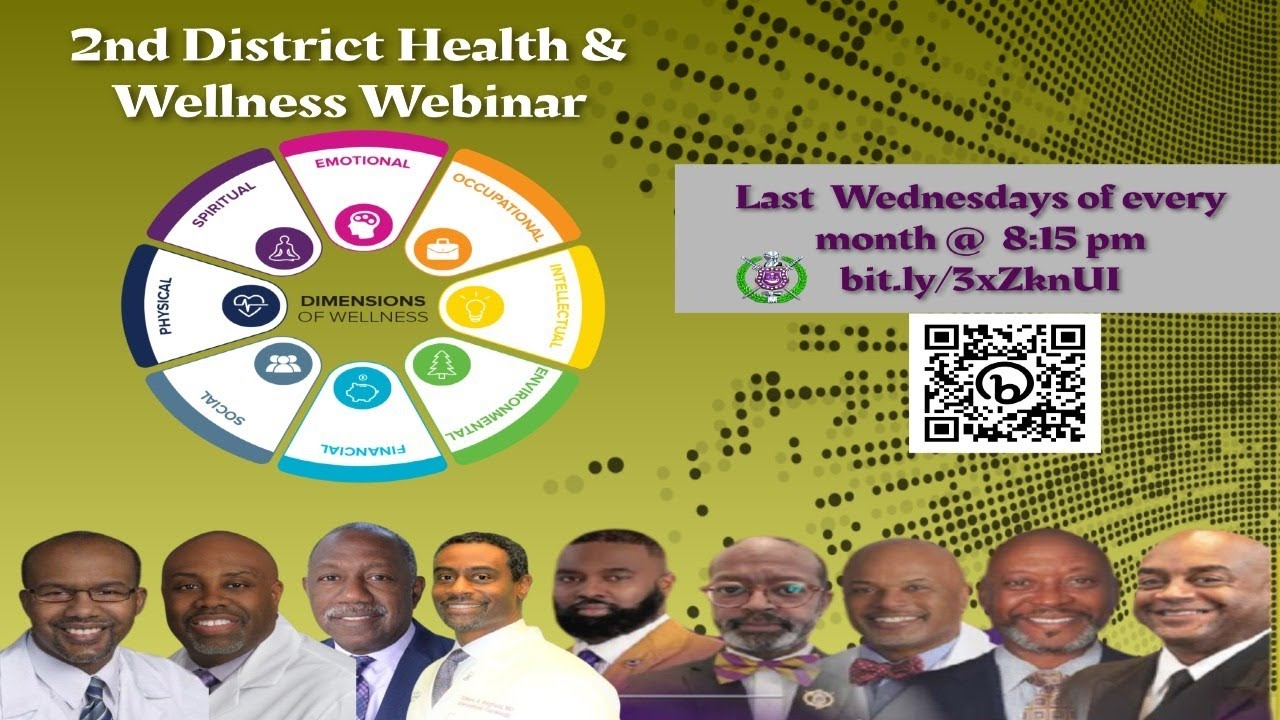
Good evening and welcome to the Omega SII Fraternity Incorporated Second District Health and Wellness monthly webinar I am Dr Keith boyin your host for the evening your moderator for the evening I am a retired pediatrician and internist I hope everyone had a a great holiday season and a very very uh good
New year so far uh we’re glad to be back at what we do U uh monthly for our communities as usually our webinars focus on prevention education and information for our communities but everybody is welcome first I got to say that the opinions expressed here are solely those of the individual PE person
Speaking or presenting and do not represent those of the Omega SciFi Fraternity Incorporated now tonight we have some very important topics to discuss but before we get started I want to give each brother an opportunity to do some opening remarks we’ll start with our our chairman of committee Dr Jan Phillips Dr
Phillips are you there Dr Phillips I here sorry for little technical difficulties for the technical difficulties still here at work just finished up with my last patient of the day but again just happy to be here with everyone talking about these important issues again the message that we’re trying
To convey each month is a message of prevention because as we’ve said many times prevention when it comes to your health cost you a whole lot less than reaction so looking forward to our conversation this evening and good to see you big bro 78 all right all right
Okay is Dr Winfield in the house did you make it in bro Winfield okay I’ll come back to him um Dr Isabelle W you give us your opening remarks oh there’s Dr Win go ahead sorry about that I’m live good evening good evening uh thanks once again this is uh
As always a pleasure honor to be here ready to exchange information uh hopefully everyone can hear me here um but uh but uh interesting topic great need for this discussion that we’re gonna have tonight so uh looking forward to it thank you go ahead Dr Isabelle good uh good
Evening um thank you for uh sorry having a little technical diffic difficulties um there I go I could um good evening um Dr Lee Isabelle good here for the discussion that we do today web there um thank you all right thank you so much Dr Isel Dr plumber I know he’s here Dr
Plumber all right let’s see if Dr Ford’s here sorry all right happy New Year everyone um my name is Dr plumber I’m a board certified OBGYN and I specialize inal medicine um I try to do the discussion for about women’s health and we’ll have a very good discussion on uh the topics for
Today great thank you Dr Plum Dr Fort were you able to make it so far I know you were trying to get on it’s Dr Ford on if not we’ll uh come back to him later so let’s go ahead and get into it you know um we talk about awareness and
Prevention and information to our communities and just what happens uh we talked about this in a previous uh for but this is this month is cervical cancer awareness month so I want to spend a brief amount of time talk about that because we have three other topics
I’d like to get to tonight as well but briefly want to talk a little bit about cervical cancer so I’m gonna hand it off to you Dr Plum why don’t you tell us a little bit from your perspective we have the other doc other brothers Chim in as
Well so all right well all right well cervical cancer is like the fourth most common cancer in the worldwide um usually about 600,000 women are diagnosed with cervical cancer worldwide and about 342,000 deaths worldwide in the United States though it’s um documented to have about 11,500 cases documented in the United
States and about 4,000 deaths a year why is because the United um why United States is because of patmar screening okay now cervical cancer is pretty much almost 100% um early detected and also prevented um can be prevented in the United States with um routine P speeding
Right now the usually the first um time P SMI screening is usually about 21 to 25 years of of age um and um pap smear screening can be started at that time and another thing that also has helped decrease the cervical cancer rate is vaccination of which are most common causes are
Usually 16 18 and 33 which are the most common can um common HPV that can cause cervical cancer so with routine papsmear screening starting at age 21 to 25 um starting at age 21 to 25 and then usually around every three years or every five years until you get to
Probably about age 65 if you have no abnormal P smears or anything that can stop or if you have hysterctomy not due to cancer um then um cervical screening could be stopped but the whole thing is to follow up with your gynecologist especially at the age of 21 to 25 and at
Least get your first uh papsmear all right thank you we gonna pause here a moment Dr Ford was able to join us now Dr Ford would you go ahead and give us your opening remarks please yes good evening everybody um just want to say thank you for having me again in um it’s
Always a pleasure to come and and be amongst the BRS and give some good information out I think we have uh multiple topics this evening and looking forward to sharing the information thank you thank you U Dr Ford now um Dr Plum you talked about you know screening you talked about things
Uh particular uh what they need to do agents and cut offs and things like that but I think you talked about one important thing that I think that we need to embrace in the and especially in the africanamerican community that’s vaccination for so I know that uh
Probably all of the doctors down here including myself uh at some point in time have recommended the vaccination for us let’s talk a little bit about that you know in your private practices or in your scope what are you what are your brothers doing what are you saying
What information are you giving to people about the uh the uh the HPV vaccine so anybody can take that question well you know as a primary care physician myself and I do women’s health and women’s preventive Health again I also discuss advocating for the vaccination because number one
Vaccination can play a major role in prevention of pro uh cervical cancer you know and that can be not only in our female patients but also you know as the recommendations indicate you know they recommend it for young young men as well because it also can help them in
Preventing some ailments as well so I understand you know we’ve got a vaccinations a Hot Topic as we’ve come out of the pandemic so what I try to do is just really attach people to the vaccination Act and the things that it can prevent because I think a lot of
People are not aware of the benefits of the vaccine so I try to do it in that way I you know will be somewhat of a pest if they say no the first time uh hey you think about it you know and and that chooses the way that I go about it
I find you know I’m sure that all of us can attest when your patients trust you even with their you know hesitancy they will you know follow along with your recommendations so I think again as we’ve talked about with the covid vaccine understand where people’s apprehension is coming from educate them
As far as the benefits and the information pertaining to this vaccination um I know a lot of people are very concerned with the HPV because you know there’s been some data that NE wasn’t necessarily correct but it tried to make it seem like this was some type
Of experiment that was being planted in communities of color but again we look at these cancers that we’re talking about cervical cancer penile cancer those can occur in our space because of our lack of utilization of preventive services so that’s one of the strategies that I use in trying to get my patients
To be comfortable with taking this vaccine Dr Isel you had something you wanted to add to that yes uh to add to that originally when the vaccine came out it was for a certain age I think up to uh age 26 but now you have uh patients accent between age 26 and 45
It’s it’s also been giving and I even have some patients that are probably older like 46 and they at the doctor’s discretion they may ask for it but I I noticed over time that has changed and there are patients some have asked me regarding that um and as we know the HP
The 16 and the 18th those are the the highest one that increase risk of the cervical cancer if they have those last Also regarding I I do HIV Primary Care um and and the screening uh usually is different uh where it usually stops at age
65 but uh an HIV or in body immune compromise they recommend uh lifetime because of for some reason HIV patients have a higher risk of of develop cervic if they get cervical cancer it can progress fast so folks you hear you heard that we we you know something that was important
That we need to uh to to be aware of I mean even I’m sure you Dr four you have a fair amount of people in your practice you have to deal with too that need to uh be aware of cervical cancer and maybe be referred to place like that what is
Your take on it right so definitely uh cervical cancer but also there’s other cancers there’s anal cancer throat cancer uh so multiple other cancers that it can prevent and so this is just one one of the things that we have in our armamentarium to to help uh far as
Prevention is concerned uh especially we’re talking about you know uh uh people have uh different sexual practices that uh you know you want to help to them to stay healthy and prevent them from getting uh other uh cancers so definitely we’re promoting it and and not everybody you know I think
What uh Dr Phillips said you know as their Primary Care sometimes you have to tell them several times they may not catch it the first time that next year when they come in for their physical you want to hit them again with it so just being persistent uh with trying to get
Them to get the vaccine thank you I think a lot of people fail to realize the importance of it sometime you know that’s why they don’t ask about it they don’t think about it because they think it won’t won’t happen to them but you know as we said here uh for our audience
That this is this is cancer cervical cancer awareness mon we want to make sure everybody’s aware of that particular can cancer and as as as my brothers have told you that the vaccine is very good for preventing it as a matter of fact there was a study done
That showed there was a significant decrease in amount of cervical cancer in the black population uh with the Advent of the HPV vaccine so uh please think about that getting uh getting uh your the vaccine done and at least discuss it with your primary care doctor uh and and
And if your parents out there you know even though your children are are not supposed to be uh having sex you you say but they are and so make sure you have have them uh get their vaccine as well the vaccine will not cause them to be
Promiscuous it has nothing to do with that all it’s only a preventative vaccine has nothing to do with the mental aspects of people so please don’t think about the HPV vaccine as something that promotes uh sexual uh promiscuity because it doesn’t now um you know uh we
We had a good discussion on that so far but let’s turn our attention to something else another important topic in our in our community and that’s thyroid disease you know a lot of people uh don’t know a lot about thyroid disease or they think they know about thyroid disease and they probably heard
Somebody talk about the term Goa so one with one of the brothers would just just tell us what is the what is the importance of uh thyroid health and some of the things we experienced in thyroid disease we lost Dr Ford well you know again let’s look at what does the
Thyroid do the thyroid regulates your metab olism so again an overactive thyroid which is a thyroid that’s um causing and over over secretion of thyroid hormone can cause things like palpitations can cause um sweating excessively can cause abnormal weight loss can cause abnormal GI function and the interesting thing when you think
About thyroid disease is that because a a lot of these things could be attributed you know you’re just anxious you know it can be a very frustrating process to getting a diagnosis because a lot of times the the symptoms can be associated with mood related symptoms and as we’ve talked about many times
Mental health issues isn’t always our community’s Forte an underactive thyroid can cause basically symptoms of you feeling like you’re slowing down you feel cold a lot you can feel fatigued you can notice changes in your bowel habits such as constipation you can notice dry skin and this can
Contribute um it can cause some weight gain and this can contribute to other conditions such as cholesterol abnormalities so again the thyroid can affect many other aspects of our function and it is something as a family doctor that I’m checking on a regular basis as far as questions and probably a blood
Test to evaluate thyroid function now there’s some circumstances that can particularly concerning as far as the possibility of developing a thyroid issue such as women who are pregnant sometimes they can have problems with their thyroid after pregnancy um in addition to that if a person has an an
Abnor normal immune reaction possibly an immune reaction to their thyroid gland that can cause an excessive secretion of thyroid hormone which can cause thyroid um abnormal symptoms in addition to that if a person’s had their thyroid removed that can unfortunately lead to you having to deal with thyroid issues and
Being monitored and managed with medication for the fa seeable future so the thyroid is something that can affect a lot of different areas of our body and unfortunately it could also mask itself to people that may not be great at going to the doctor as you know what you just
Stressed out you depressed you know and unfortunately we’ve already discussed that mental health issues aren’t the ones that we follow up or get evaluated on an aggressive basis so this could be something that a person could sit with I had a patient who I diagnosed with an overactive thyroid and she had been
Walking around for a few years friends family all talking about oh you’re just stressed and anxious all the time you don’t eat right and when we did the workup it was quite clear that she had a thyroid issue so again it is something that can affect you in a variety of ways
I see Dr Dr Isabelle looks like like he wants to add go ahead Dr Isabelle all right um to add to the thyroid where is the thyroid located the thyroid is located here midline the neck um doctors sometimes palpate in the front or they palpate it standing in the
Back and have you swallow and and they palpate for any noin so the think of your thyroid um is involved it’s a hormone but it it’s involved it metabolism um and Metabolism think of the thyroid as a battery because uh say if it’s overactive or underactive or
Even um it it affects metabolism can affect your heart where it can make your heartbeat too fast can be beat too slow it helps uh in metabolism of of certain certain things in the liver the food that gives you energy throughout the whole body so if the thyroids off
Uh uh like uh uh brother uh uh Dr jadan Phillips said you get all these side effects and one thing I like uh to add uh the for example underactive thyroid uh where you see your doctor what test do they do like they do the TSH which is the thyroid stimulating
Hormone test so usually if that’s high uh then it’s usually a sign of uh underactive thyroid uh some confusion people think oh it’s high my thyroid must be overactive but it’s actually when it’s low uh when it’s uh um overactive then you have what you call subclinical uh under hypothyroidism or
Overactive thyroid is for example if your TSH is little less than 10 you may not have any symptoms at all and then they may do you need medication or not or we may I may just watch it and usually they recommend if you’re 10 or high but I know some
Depending on providers some may start it at a lower level um and one important a lot of patients I find out they don’t really I for underactive thyroid that you’re supposed to take the uh like the Synthroid laoxu pill on an empty stomach because taking with other medications it
Affects the absorption and it’s hard to regulate the dose um yeah I yeah I heard two I heard two two major areas that I brother Dr Phils and brother Dr Isabel talked about and that’s um cardiac and that’s probably going to be some significant manifestations in uh pregnancy as well
So before I get to you Dr Plum let’s hear uh some about the cardiac manifestations of thyroid disease from Dr Winfield are you there Dr Winfield are you there yeah okay hopefully I’m clear I really have a really bad connection um what what I
Tend to to say when it comes to the uh the the thyroid gland is the thyroid is the great masquerader okay because it can exhibit all types of symptoms uh from palpitations to weight loss to constipation to diarhea um so from a cardiac standpoint to to elevated
Cholesterol so from a from a cardiac standpoint uh we do screen uh thyroid function when it comes to blood pressure I have younger patients who present present with high blood pressure in their 20s and 30s um that can certainly be related to to issues with the thyroid elevated chol by issues with
With the thyroid gland uh those symptoms of palpitation atrial fibrillation all of the AR pushed by uh issues with the thyroid gland so certainly that that’s something that that we F focus on from from a heart um and across the board from a medical standpoint so again the great
Masquerader it can present with anxiety stress um uh palpitations heart manifestations Etc thank you Dr FF Dr Plummer tell us about thyroid in pregnancy because I know it’s a it’s a very important thing to to deal with in pregnancy having uh had kids that were born to mothers of
You know hyper thyroid disease so tell me tell tell us a little bit about you manifestations of thyroid and and pregnancy and and pregnant women and just women in general so well usually the the first um way we find out there thyroid disease is usually infertility
So when a woman is missing her period or is not able to get pregnant one of the things that we do screen for is their thyroid now um if they’re if they have um thyroid issues and it’s not controlled either hyper or hypo they causes an increased risk of pregnancy
Loss Plus plus you know hyperthyroidism can also increase the risk of pre of preac clamsy and elevated blood pressure in pregnancy um one of the good things is is that most of the medication supplementation or medication to help reduce the amount of the hyperactive thyroid can be taken in pregnancy and
One of the things that we also look for is those antibodies can also go across the placenta um that stimulate the thyroid hormone and can also stimulate the thyroid hormone in the fetus which can cause a a fetal goiter so that’s one thing um the importance of taking your U
Medication to help reduce the hyperactivity of the thyroid when you’re pregnant um but most of the time it’s usually more hypothyroidism is more of the issue and they can take their thyroid supplementation um and really have very successful pregnancies thank you you know in my in
My world um you know when they have the mothers have uh not managed their thyroid well sometimes we get a baby called what’s called a Creed and these babies are overweight babies they have a characteristic facial but their tongue kind of protrudes out and these babies
Um have a problems with eating and and and um um um metabolism problems so you know if if you have a child out there and well you’re pregnant and you you know you want to make sure that you uh manage your your thyroid disease with your either your OBGYN or your primary
Care duct because I I I hate to see them come to me uh as a pediatrician when it wasn’t well managed so so with that saying that Dr Ford take us through take us through uh your aspect when you see somebody with suspected or known thyroid
Disease right but one of the things too that I think we just talked about uh hypo and hyperthyroidism but other things that we talk about are thyroid nodules okay and so you know take doing a good exam um Dr Isabelle mentioned how you examine a thyroid gland but a lot of
Times we may feel a nodule or multiple nodules on the thyroid gland and that has to be investigated uh 40% of the population actually has thyroid nodules but not all thyroid nodules are uh uh malignant actually it’s a very small percentage about 5% that are actually malignant meaning are cancerous but we
Need to work it up and by working it up we need to uh get a blood test we also talked about that that thyroid stimulating hormone that will assess whether the thyroid that whether a nodule is overactive underactive not active at all and that will determine
What type of workup we would actually do on that particular patient if the patient’s uh TSH or uh is very low which suggests that they have a overactive thyroid nodule then we would do a what’s called a thyroid scan with uptake and try to see if that’s a hot ndil and that
Would be treated differently and most of those are benign not cancer so you wouldn’t really even go about trying to bobsy those but if you have someone that has a TSH that is normal or the TSH is elevated then that’s when we go we do a ultrasound try to see with that that
Nodu is a solid nodle or a cystic nodu right if it’s a solid nodu then that’s when we would consider uh depending on the size of the nodule the shape of the nodule uh different characteristics will determine whether you want to do a biopsy of the nodu and once you do a
Biopsy then what they basically uh kind of graded to see you know what’s going on whether it’s precancerous whether it’s lowrisk of cancer and then that determines how often you want to go back and actually revisit that nodu because if it’s cancer obviously that’s something you’re going to go refer to a
Surgeon and they’re going to uh uh remove the nodule or remove the whole thyroid but if it’s not cancerous we still have to follow it because sometimes even when you do we have to follow not sometimes we have to follow it whether it’s in six to 12
Months depending on um the actual what the cells look like when you do the fine needle boxing that’s that’s very very interesting I forgot about that aspect of thyroid no I had a good friend of mine who um had a uh I don’t remember if
She had a nodal or what she’s uh and she uh went saw someone and um they kind of like didn’t do a whole lot for her but she saw a subsequent person found out that she did have a thyroid cancer and she got it taken out and she’s doing
Very well now so uh it’s it’s important folks that you uh you know follow through this stuff what we haven’t talked about here though is thyroid eye disease you see all those commercial Tye of thyroid eye disease you know these people with these protruding eyes and
Dry eyes and red eyes and things like that so that’s another important aspect of thyroid disease is thyroid eye disease I’m not sure if any of you guys have seen in your practices here but uh people need to be aware of thyroid eye disease as well so that’s a good segment for our
Next topic and that is glaucoma another very very important topic in the African-American Community because we are at risk for glaucoma and I think I’m going to ask Dr Isabelle to tell us what are the risk for uh glaucoma what do we need to worry about glaucoma
For the reason um we have to worry about glycom uh I I coma because it can affect the optic nerve and the optic nerve is what we need to help us see Vision um so a lot of you know people usually don’t have symptoms at first of
Glaucoma they can have a high normal pressure and not know slowly that uh that um the the fluid that we call in the eye the AC fluid of is being pressure is going up and putting strain on the optic nerve sometimes people may get symptoms of
Headache nausea and not realize it or or redness of the eye uh normal pressure is usually between between of the eye is between 10 and 20 um a lot of times uh patients do not see their eye doctor or get their pressure checked um they may just go to the a
Store their Visions changing and they just may get reading uh glasses not knowing that it’s a pressure problem uh it’s higher us we for some reasons we don’t know 100% but um some say uh in African-Americans is it because the cornier is thinner um but that’s
Subjective uh but is that the reason why it’s higher in the African Community or is it uh way access to seeing opthalmologist or aetr um personally you know we should also know uh family history um it can affect anyone in the family for example you know personally
In my family my son he’s only 17 he was um recently diagnosed with you know glycom his side effects he would get these headaches feel light headaches in brief episodes of blindness um so we took them to I doctor and we knew his pressure was high and me I I I say there
Um glycom and my family um come to I didn’t know my grandfather had glycom um you think you don’t know all your his history you ask your parents but then they bring oh yeah uh up that a a family member it’s also noted on my wife’s side so everyone personally I’ve you know
Um been May been affected with glycom so you bring up an interesting point there you uh and I’m gonna come to you Dr for bring an interesting point there you said that family history so if you have a family history of uh glaucoma then you at risk for developing you know
My sister uh she gets her pressures um checked regularly and they won’t come out and call her glaucoma yet but they say her pressures are on the border line and so she takes drops and things like that and you talked about red eyes that’s why I was brought with thyroid
Disease because is it thyroid is it red eyes from thyroid disease or is from glaucoma is your headache uh from something else or is your headache from glaucoma those are important things to know now there are other risk factor I think you wanted to talk about that a little bit Dr
Ford well yeah definitely um one thing I definitely wanted to stress though was talk to your family right we we don’t always get family you know our parents don’t tell us what’s going on or your siblings so that’s so important to know that someone in your family has glaucoma
You know and and uh Dr Isabelle just mentioned his uh his son my mom just last month complaining of headaches complaining all these things she and he mentioned that the the uh uh upper limit of normal of eye pressure is 20 my mom’s eye pressure was 60 wow and so she she
Had emergency surgery to try to relieve the pressure which helped her to save her vision but it was just good that she we knew to bring her to to the doctor but it’s so important to know your family history so that now I need to know I already I just made my eye
Appointment again I was a little over a year but to know that so I I know what to do and my children will know what to do also so I think that’s so important yeah go ahead I was gonna say uh you know Dr Isel shared about his
Particular problem I know Dr Plum and I were talking beforehand about some of the issues that can cause glaucoma later on life you know the normal risk factors if a if you’re African-American is if you’re 50 older or if you’re Hispanic and you’re 65 Old the normal risk
Factors but Dr the plum when I were talking before the show about another factor that could affect your glaucoma down the road you want if you IM sharing a little bit about that oh no no problem um actually I had a eye injury in the
1970s so um trauma to the eye can also cause an increase risk and glaucoma the the important thing is is that you got need to especially if you have hypertension a history of trauma diabetes you need to see and um need to get your eye examined and your an eye
Examin is really not looking to see if this one is better this one sees better or this one is better you need to have where they dialate your eyes they’re able to look at your retina and is able also to take your pressure a lot of people are apprehensive about people
Looking in their eyes there are people are apprehensive about anything coming anywhere near the eye but the most important thing is your eyesight I mean it’s one of the most important senses that we have and um it’s a very delicate sense so you need to be on top of it and
Need to go to the eye doctor regularly and that’s one of the things with the prevention that we’ve always been doing day in and day out is um definitely prevention prevention prevention and this is the simplest thing that you can do if you don’t have access to an um an
Opthalmologist or your optometrist doesn’t want to dilate your eyes or look in the back of your eyes then you know you definitely need to make an appointment with a clinic or whatever that has an opthalmologist that can do an um a full Opthalmology exam primary care doctor could
Definitely help you set that up so again take advantage of that and I think one of the things that Dr plumber said that is so important is regularly so that means that just because you went once and there was no problems don’t mean you go back again especially in the circumstances where
You have a history of hypertension or a history more importantly of diabetes because a lot of times you know people will go the first time but they fall off with their followup appointments down the road and unfortunately when you fall off on that and I think you know a lot
Of falling off has occurred over the past couple years because of the interruption caused by the pandemic you know these problems that may not have been you know noticeable you wait three four years now we’ve got a situation that we can’t Turn Around from right yeah because we’re trying to prevent you
From going blind we’re trying to prevent you as Dr isbel said in the in the uh in his opening uh comment was that it affects the optic nerve and you know you don’t you only get one pair of eyes you know they don’t grow back they don’t
Regenerate so you got to take care of them and to that end uh for the for for our older folks out there anybody that’s on Medicare Medicare will pay for glaucoma screening once every 12 months so if you on on Medicare you can automatically get free glaucoma
Screening so I think uh you should take advantage of that if you own Medicare and you can find out more information about glaucoma and other things at medicare.gov so um say for instance someone comes into your office and you suspect they have glaucoma or in your case Dr for your
Mother had very very high pressures uh what would be some of the recommendations you would do to them would you tell them that they need to see an Opthomologist right then there or whatever or you know they say my vision is is poor I got headaches what would
You guys tell them the next step to do if you’re thinking Glock we talked about a little bit but I want to make sure people understand what they need to do if they come to see you and we’re suspecting that they have glockoma anybody I’ve had this scenario I’m sorry Dr go ahead
Sir I was saying that someone that c comes into the office who you truly suspect has that as the primary care physician I would try to expedite the the the referral right I wouldn’t have given them a referral oh you go call someone uh call a op op opthalmologist no get on
The phone call try to get them a more urgent appointments because time is the essence if the if the pressure is really that high yeah did you ask you you were gonna start to say Dr Phillips ah Dr Ford covered it yeah so there there and
And it’s beyond the the the scope of this discussion but there are two types of of of glaucoma uh that people need to be aware of too so you know uh when you when you see doctor make sure you understand what you got and as as all
The doctors have said here you need to keep a track close track on you need to follow up with that do not ignore the signs and symptoms of it if headaches and vision problems so that’s that’s a very important that’s why we bring this topic up tonight because we want you to
Have information about gloma I mean I don’t see it myself in the realm of Pediatrics unless they have some type of trauma as Dr uh Isabel said his his son did so you know might be what pediatricians will see but most of the time it’s people that are African-American over 50 diabetic
Hispanic panic over 50 uh and um family history of glaucoma would be another reason we would think about this so please folks get your eyes checked regularly when you reach a certain age you know everybody should probably have their eyes examined every two years and when you reach a certain age of certain
Diseases such as diabetes you should have your eyes checked every year because the other problems associated with eye uh from GL uh from diabetes and things like that so please please get your eyes examined I can’t stress that enough uh that you don’t go ahead Dr
Phillips no I was just going to add to what you were saying Dr boin and don’t let especially in a situation of diabetes the fact that you don’t have any visual issues at the moment deter you from getting that regular eye exam because on a microscopic level things
Could be happening before they manifest in a way that you would notice with your vision so that prevention again is of the utmost importance thank you I like uh to add one one uh there are are different types of uh glycom for example the most common
Is is open um open glycom open angle glycom and that’s where uh there’s like drainage of the fluid and then there’s like angle closure glycom where there’s like a blockage and then there uh there’s normal tension glycom where the pressure just gradually build up but
Then uh people have not heard of pigor G glycom uh and that’s uh that’s where small pigment granules flake off from from the iris part of the eye and and that uh can affect fluid drainage and cause a pressure to rise uh so people don’t uh the doctor
Can also notice that when the when they do exam of because they tell you what type and the the thing being in practice it’s compliance is very important because if you don’t take your eye drops now you know or every day like you should it’ll it’ll affect you maybe
Years from now five years 10 years where you you can be considered um a Le legally blind I have some patients I know that they cannot drive anymore uh because their glycom was s ver that it affected their vision and then some say I wish I was more
Compliant with my ey drops and took them like prescribed wow yeah so that you know that certainly they they out there driving they haven’t had their eyes examined you know they risk for causing an accident and different things like that you know so speaking of accidents
You know I I want to go ahead and jump into our our final topic for tonight um and that’s uh we need to talk a little bit about U donating blood there is a nationwide shortage of blood a nationwide shortage of blood and you know blood is probably is essential to
Everything that we do and that we have you know we go to surgery you have make sure you have uh thank you thank you uh uh brother Pierce for putting that up you know Save a Life give the gift of blood but if you you know if if if
You’re not available if you don’t know your blood type you don’t donate so what are you doing uh to that so you know there’s some terms people need to understand when we talk about uh donating um uh blood and uh let’s see you need to know U if you’re a universal
Donor recipient you heard those terms thrown around pretty frequently but one thing I tell you the most important type of blood out there is old negative blood but unfortunately only about 7% of the population even produce O negative blood what do you mean by positive blood and negative blood you know our bodies
Produce antigens uh to help our immune system and what the positive means just you just posit to something called rees’s factor and negative you don’t have that positivity but that’s what we know if you if you receive blood of the right blood type you won’t have an immune reaction autoimmune reaction but
Sufficed to say that we need blood now I know um Dr plumber you probably deal with people that need blood all the time because you’re an OBGYN uh and a GYN surgeon so tell us tell us about your aspect of uh blood donation why is important to you as a
Position why is important people all together definitely um especially In Obstetrics by the time you have a term pregnancy about 20% of your blood volume goes to the uterus so after delivery if your uterus does not um clamp down and and and stop bleeding it can cause a
Hemorrhage that I can tell you and witness can be very very bad and you can lose you know most of your blood volume in a matter of minutes that’s that’s the reason why that when you deliver at home you’re taking a certain risk because if there’s a hemorrage that happens it’ll
It’ll take a while before you’re able to get to the hospital and the reason and there’s so much blood loss and losing so much of your volume that your blood um products need to be replaced and the only thing that carries oxygen to the cell of your to the cells of your body
Is is um red blood cell so they can give you fluids to get your um volume up but the most important oxygen carrying part of to your to your tissues that you need to survive is going to be through red blood cells so um the importance of
Donation is um there because we need packed red blood cells because when you donate your blood they will take the packed red blood cells cells they will also take platelets and they will also take um coagulation factors factors that will help you stop bleeding and that is
The whole component of when you do go end up in a trauma even if you’re not pregnant that you need to replace your blood volume you get your packed red blood cells what also will help stop the bleeding also too if you don’t have um clotting factors in there is also
Getting transfused clotting factors that were from donated blood so the whole thing with um blood donation is very important um people that can donate blood should donate blood because we are in a blood shortage and you don’t want if your family member was bleeding and needed a blood transfusion and didn’t
Have access to blood so everybody if you can uh donate blood um uh donate uh donate blood I just want to get this little fact in here real quick uh ladies and gentlemen out there you can thank Dr Charles Drew a great Omega Man for discovering this and he uh he did such
Pioneer work in blood transfusions and blood banking so you know if it wasn’t for his work he was a surgeon um and uh if it wasn’t for his work we wouldn’t know how we would do things at this particular point in time matter of fact that there’s a lot of argument about
What he was doing was not correct but he turned out to be very correct in what he was doing so um I do wanted to go back to the to to blood types again because um you know you know what your blood type is you know you don’t have to
Necessarily go and say do give me my blood type because blood type can be done very quickly but if you if you do know your blood type is an important thing to know because maybe you’re out there you involved in trauma and they say you know what’s your blood Ty I
Don’t know you know as a matter of fact I don’t know if you saw Dr for I saw on the news tonight that DC is trying to um get this thing going they carry blood is part of their First Responders kit the time you go get donation there’s
A lot of blood loss so they’re trying to to to to Pion I guess they trying to see how that’s going to work out with giv blood out there but you know 7% of population is O Negative that’s if they they can anybody can receive O negative
Blood but the problem is if you O Negative you can only get O negative blood you can’t get anybody else’s type of blood only O Negative now O positive is the most common blood needed and about 38% of the population have this particular one uh but the thing about O
Positive that any um positive blood type can receive blood type A positive B positive positive positive uh 8% of the population has a positive blood type but again positive can only receive positive blood that’s what’s important about knowing your blood type I don’t want to
Spend a lot of time on that but I want people to understand that you know you have you type you know you might get in situation I mean I have on my medical bra my medical ID bracelet is my blood type because something just happen to me
And I can’t talk they don’t know what my blood type is you put your blood type in your smartphone these days you can have blood type in there you can have it in a thing in your wallet so I mean blood knowing your blood type is important
Especially when you want to donate blood so Dr winin what about in your aspect of what you do I mean you’re Interventional cardiologist I mean what what would you say about and Cardiology in general with blood donations so what would you say about that yeah thank you no it’s it’s a
Big must it is certainly we have to increase the awareness in terms of the importance of donating blood because when you’re in that situation blood is vital um from a from a cardiac standpoint I deal a lot with cardiothoracic surgeons right now we have a lot of patients on antiplatelet
Medications or uh anti-coagulant so so blood thinners uh and when you’re on a blood thinner uh your risk of losing blood is is a bit higher certainly is higher and your need for uh blood products certainly uh goes up so all hospitals throughout the country we’ve tightened our our our threshold for
Blood transfusion in in an attempt to preserve the blood products that we s that we have uh there there multiple measures to avoid wasting of blood products so when you order blood products you better need them um so so it is is certainly vital from a hospital
Standpoint uh to um to to to have that Supply uh it’s important to increase the awareness for the population to to donate blood but uh but when we talk about heart disease which is the number one killer um of throughout the world um and the the need for blood products when
We deal with open heart surgery valve surgeries even even heart attacks um there uh there there tends to be a need for for blood products so um this is certainly something that we should uh uh continue to discuss and and increase the awareness for are there any Contra
Indications of giving blood anybody any Contra indications that we can’t donate blood yeah so we know that uh people who have certain infections someone that has HIV you know you can’t get blood uh or Hepatitis B or active Hepatitis B or C those things can be transmitted through
The blood but I think one of the things that um um we need to look at is you know who can really give blood because our chapter gamma pod chapter we do blood donation uh at least twice year at a minimum and so anyone that’s 16 years
Old right they can give blood anyone that’s uh over the weight of 110 pounds they can give blood uh basically you have to and you can give blood up to every two months right you can go and give blood and you have to feel well that day right
So you can’t go there and you got a fever you’re you’re coughing you’re hacking but one of the other things I got a lot of people people even some some brothers in the fraternity hey man I can’t give blood I have diabetes no you can give blood if you have diabetes
Right we know a lot of people have diabetes but your diabetes has to be under pretty good control you man I got high blood pressure I can’t give blood I take blood pressure no you can give blood right so one of the m is figuring out you know people don’t know they have
Certain diseases and saying hey I can’t get blood no a lot of times can get blood it’s only time if you can’t get blood if you have high blood pressure your blood pressure is way out of control and I think they mentioned if it’s over 100 systolic 180 Dak over 100
Yeah you can’t give blood like that but knowing we gotta increase the pool of people right that and let them know hey you can get blood you know people on blood thinners you can’t give blood if you’re on you know cumin if you’re on uh some the other blood thin is because
You’re not going your blood’s not going to clot so those are the people that really cannot get blood um let’s see who else um those are M and people on insulin you can give blood if you’re on insulin you know I’ve heard this story several times people even people in the
Chapter or people in the in in my office when I try to promote our blood dries so uh I know someone else may want to step in on that also but that was my spill for that I mean my my only thing is um anemia
Um is is also probably an issue of of for donating blood um if you have the CLE cell trait you can still donate blood um I think a lot of it will go for um platelets and other um blood clotting um things but also they can also filter
Out some of your red blood cells so that is also on there um donating blood during pregnancy I probably it’s not really too much recommended because they’re probably going to end up with anemia usually in the second trimester anyway just because of the hemodilution of the expansion of plasma volume but um
After you’re not pregnant and you’re healthy and not having any issues yes you definitely um can donate blood just to add uh we covered a lot regarding uh blood uh donation for uh sickle cell disease about a 100,000 people in the United States have CLE cell it affects of the African American
Uh Community uh so uh your blood donations could help alleviate uh some of the symptoms uh so they say if if if just one out of three people needed to uh donate blood increased in that in the lifetime that would just if we increase by 1% uh and then then that would help
Alleviate the American show shortage of of donated blood uh and one other thing where you can’t donate if you traveled out of the country there’s a time period you may have to wait for um thank you yeah a good question would be can you can you give blood after you
Had Co I didn’t think about it before we got on the call tonight that’s another uh thing to think about uh certain uh illnesses like co uh you know um Dr Ford I believe it was said that you know you can give blood uh give blood as
Young as 16 years of age but I want people out there to also understand any age can receive blood and we give blood to to to to newborn babies we give blood to U uh premature baby so anybody can receive blood as long as you you’re typed and matched properly and you don’t
Have a transfusion reaction or you haven’t had a transfusion reaction in the past there are some people that that do require blood transfusion but we have a way they have transfusion re we have a way of premeditating them so that they can still receive blood because blood is
A lifesaving thing and American Red Cross is certainly uh certainly asking people to please give blood because we have a shortage we know we need O negative blood so if you ow negative you know really really consider giving it but if you’re ositive please also consider giving blood but anybody any
Blood type can donate blood and is uh I think Dr Ford also said you can give it every two months people can donate plasma and different things like that so you know blood donations is a very important uh part of our community and part of our ourselves doing our our own
Work for prevention is as by donating blood because you never know when somebody in our community may need blood whether it’s from trauma whether it’s from surgery whether it’s from anything uh that that need you know not B you severely anemic that have to be transfused I’ve had kids with blood uh
Hemoglobin is as low as six that had to be transfused because it had some U some problems with some uh autoimmune uh disorders and and they had to be transfused because those kids can’t walk around with a hemog glob a six and expect to survive so that’s why blood
Donations is very very important you don’t think about it the little things like that that we take for granted uh that blood uh transfusions will help and we got to have blood donated to have because we have to have a pool Dr Winfield said you know we have such a
Charge of blood now that we have to we have to make sure that when you we order a blood transfusion that is is is is indicated because it’s such a shortage of U blood out there in pool so we get into about that time to the top of the
Hour you we talked about a lot of things tonight we talked about um uh cervical cancer prevention we talked about thyroid disease we talked about uh glaucoma and we just finished talking about blood donation all very important topics in this uh our community now I will tell you that maybe some point long
In future future webinars we we bring some of these subjects back up again but that’s how important they are particularly donating blood you’ll notice that every time that we have a webinar just about at the end we’ll say please donate blood because that’s that critical of a blood shortage in this
Country so I’m gonna ask the brothers now to to consider giving their closing remarks we’ll start with you Dr Ford and we’ll move our way up all right good evening so I think we definitely talked about a lot of great topics today that really affect our
Community the bottom line is you need to go uh and get checked out by your your physician get check go get your eye exam to get screen for glaucoma uh physician can check your your neck and your thyroid gland and do some blood tests to make sure that your thyroid is
Functioning properly um so these are all uh things to do bottom line is you need to go in and see your Physicians whether it’s your opthalmologist your your your primary care physician uh or obviously even our specialist thank you thank you Dr Dr plumber good evening um I always learn
Something new being around these brothers I look always look forward to all these uh these webinars that we do um and the same thing we always been talking about is prevention prevention and also Senor primary care doctor we talked about cervical cancer cervical cancer can almost 100% be prevented or
Early detected with uh pap smears and follow and good followup also don’t forget about the HPV vaccine especially when you could vaccinate your early teenagers um that can give a a lifelong um of of prevention and um follow up with your eye doctor regularly so you
Can get your eye examed and those were the most important topics we’ve been hitting all all evening and good night thank you Dr Isabelle sorry so the the most important thing uh physical exams see your doctor and they’ll dis all these preventive measures from cervical cancer the importance of eye exam to
Check for glycom even cataracts and then check your thyroid because all these work together to keep your body working and functioning um and to add to a blood donation there’s only one instance of of usually you see a hemat that maybe you can donate more blood more frequently
And that’s somebody who has either primary uh uh polycythemia or or or secondary that’s where your blood is very too thick because if it’s too thick you can run into problems these blood don’t sites they they love those patients because they can do it sometimes maybe a little
Bit more frequently that’s the only instance thank you a good evening Dr Winfield thank you uh it is it’s just great to be a part of this this uh this conversation and and I really want everyone who is watching to really understand the importance of this and
How vital this information is and really to hear it from us um we’re in the trenches every single day and anytime we can increase awareness as Dr plumber said he’s learning I’m actually learning uh and what we all need to do is really act on this information preventative
Medicine is the the way to cure disease or prevent disease so um uh unbelievable uh subject matter are covered we covered a lot and we really just want everyone to act on this follow with your or or get an appointment with your primary care physician see your eye specialist
Uh women need to be screened we have to talk about vaccines and preventative medicine it is absolutely vital so uh I really applaud this entire group look forward to doing it again next month okay thank you all right 88 give us your give us your takeout bro all right well
Again I I enjoy this tremendously like that like everyone has said I mean I was rushing my patients out the office so I wouldn’t be late so I can make sure I got a piece of this but again as I said earlier prevention costs us a whole lot
Less than reaction and we want you to continue to log in with us on the last Wednesday of the month uh for our preventive Health topics but also since it’s the beginning of the year and this is the last day of Jan anuary you know again time to make your appointment for
Your primary care annual exam and that is a space where all of these preventive issues can be addressed and a plan of action can be developed so let’s stay ahead of the game y’all because catching up makes us the lwh hanging fruit and we saw over the past three years with this
Pandemic lwh hanging fruit doesn’t FW with these viruses and these um pandemics that have occurred thank you Dr Phillips okay so with with that being said I’ll go ahead and take us out brother piery I want to thank uh my brothers for being here tonight I want to thank the viewers for
Uh for tuning in as they always do and just remember please give blood blood is the life fluid for all of us and I want to thank our District representative uh brother uh Delo uh gails and I want to thank um um you the viewers for being
Here and so until next time stay healthy take care of yourselves don’t go don’t forget to go and get your your uh Primary Care exams done and pay attention to what your body is telling you have a very good evening we’ll see you next month
source
