

Working in wealth management can be an eye-opening experience at times.
There are certain ultra-high net worth clients you work with who have so much money that it doesn’t really matter how the money is invested. They could put it all into T-bills or put it all in stocks and they would be fine either way.
And short of blowing up or giving it all away, it doesn’t really matter how much they spend either because most of the money will be passed down to the next generation anyway.
These people still require financial advice obviously but they present a different set of challenges than mere mortals.
Those mere mortals who work with an advisor are still wealthy by almost any definition but those plans require more thought, balance and trade-offs.
The typical way wealthy households are portrayed in movies and TV shows is people who live and spend extravagantly. Sure, there are plenty of rich people who live like this.
But there are also plenty of people who become rich because they didn’t live like this. They diligently saved their money. They watched it compound over many years. They built businesses, received stock options or invested their money wisely.
The biggest surprise for me in working with these clients over the years is how many of them have such a difficult time spending their hard-earned money. The traits that helped them build wealth act as a psychological barrier when it comes to spending that wealth.
My favorite extreme example of this mindset is Henrietta “Hetty” Green, who was once dubbed both “The Witch of Wall Street” and the “richest woman in America” back in the early 20th century. Green was supposedly the only woman invited to JP Morgan’s secret meeting to save the banking system during the Panic of 1907.
She was a shrewd investor and operator but was known as much for her thrift as her business acumen. Charles Slack explains in his book Hetty:
Probably the most succinct and widely disseminated version of this portrait may be found in the Guinness Book of World Records, where Hetty is listed, along with the largest lobster, the smallest antelope, and the champion hot dog eater, as the “greatest miser.” “She was so mean that her son had to have his leg amputated because of the delays in finding a free medical clinic,” the item states. “She herself lived off cold oatmeal because she was too mean to heat it, and died of apoplexy in an argument over the virtues of skimmed milk.”
There is some myth sprinkled with exaggeration here but this mentality is more pervasive than you might think.
I’m fascinated by the psychology of spending because it’s something no one teaches you how to do, even financial professionals. Most personal finance scolds want you to refrain from spending.
For financial advisors, understanding the psychology of your clients is crucial when it comes to saving and spending money. There are only two types of people when it comes to money problems:
1. People who spend too much.
2. People who save too much.
Everyone else has some combination of these two traits.
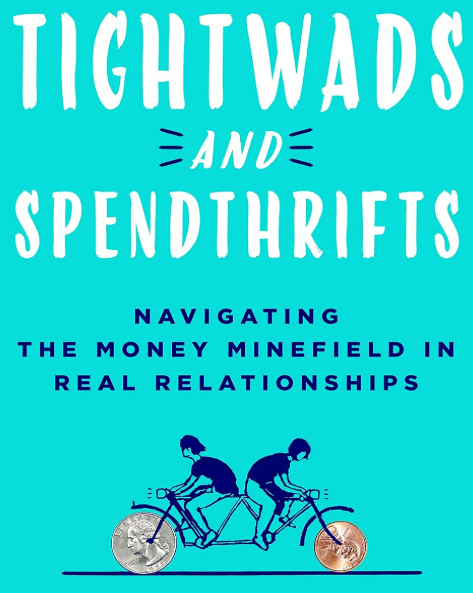
In his excellent book on the subject, Scott Rick labels these two groups Tightwads and Spendthrifts.1 Rick’s research shows that tightwads tend to be older, highly educated and more analytical. And tightwads don’t just love to save (that’s being frugal) — they hate to spend.
There’s more to life than spending money but there’s also more to life than the market value of your investment portfolio.
It’s difficult to change people’s behavior and human nature but a good financial advisor needs to understand where their clients fall on the tightwad to spendthrift spectrum to help build them a financial plan that resides somewhere in the middle.
I know people assume financial advisors would prefer to gather as many assets as possible but our financial advisors love sharing client spending success stories — family trips, vacation homes, new cars, a boat, etc. When these types of purchases are made in the context of a financial plan, it’s much easier to permit yourself to enjoy your wealth.
The money itself is not the end goal. The end goal is what you want to do with it to give yourself a rich life.
I talked to Scott on The Unlock about his research on the psychology of spending, experiences vs. material possessions, how advisors can help their clients spend more freely, how to handle couples who have different money traits and more:
If you’re a financial advisor, subscribe to The Unlock newsletter here. We’re doing deep dives into best practices, industry research, wealth tech, and growth insights that we’ve never shared anywhere else.
Subscribe to our YouTube channel so you never miss an episode.
Further Reading:
How to Spend More Money
1Rick estimates the population looks something like this: 25% tightwads, 25% spendthrifts and 50% some combination of the two.
