

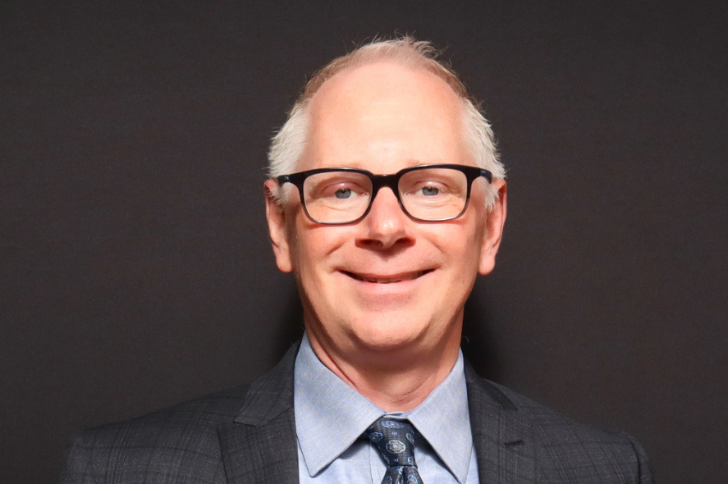
Alumnus Profile – James C. Hoppe, PhD, McMaster ’87
Brother James Hoppe, McMaster ’87, joined Bowdoin College in July 29 2024, after his time at Emerson College in Boston, where he has served as vice president and dean of campus life since 2016. He previously served for twelve years in various roles at Macalester College, most recently as dean of students.
Tell me about your undergraduate fraternity experience. Why did you choose Phi Delta Theta, and do you have any favorite memories you would like to share?
My path to brotherhood took some unexpected turns that I’ve come to treasure. During my undergraduate years at the University of New Mexico, I connected with an emerging chapter there, though I graduated before initiation could happen. Life had other plans for me. A few years later, while pursuing graduate studies, I had the good fortune to meet Dr. Edward G. Whipple, Hanover ’74, one of those chance encounters that change everything. Ed graciously recommended me for initiation with the emerging chapter at McMaster University in Ontario.
It wasn’t the conventional route by any means, but sometimes the most meaningful journeys are the ones you don’t see coming. That experience, and the brotherhood it brought into my life, has shaped who I am in ways I’m still discovering.
How have you stayed connected with Phi Delta Theta after graduation?
My first job was as a chapter advisory board chair at Northwestern University, and during that time, I was fortunate to be appointed first as Scholarship Commissioner, then as Education Commissioner, and later as dean of the Leadership College. Leadership College was eye-opening for me. Being part of gatherings where Phi Delts from across North America came together taught me so much about our brotherhood’s reach and impact. I was lucky to connect with men who have since become close friends and relationships I deeply value.
What I’m most grateful for is the opportunity to learn from incredible alumni leaders who took the time to mentor someone still figuring things out. They shared their wisdom generously and showed me what thoughtful leadership actually looks like. I often felt like I was getting far more from these experiences than I was contributing, working alongside people who had already proven themselves as both leaders and men of character. Those relationships and lessons have stayed with me, quietly influencing how I try to approach challenges and opportunities that come my way.
What accomplishments or career milestones are you most proud of, and how do you attribute them to your experience?
My career has been in higher education, and I’m currently fortunate to serve as senior vice president and dean of student affairs at Bowdoin College in Maine. It’s a role that challenges me daily and one I don’t take lightly. Looking back, I realize how much the experiences from Leadership College and other Fraternity programs shaped my perspective, often in ways I didn’t recognize at the time. Those opportunities to work with students, learn from seasoned leaders, and navigate complex situations gave me a foundation I’m still drawing on. I’m grateful for mentors who were patient enough to let me learn from mistakes and generous enough to share what they’d figured out along the way. Every day in this work reminds me how much I’m still learning about leadership, about supporting students, and about creating environments where people can grow. The fraternity experiences didn’t prepare me as much as they opened my eyes to how much preparation never really ends.
If you could go back in time, would you change anything about your experience? If so, what?
What I remember most about being initiated as a founding father of Ontario Gamma was how welcome the brothers made me feel. Here I was, essentially a stranger dropped into their midst, and they went out of their way to include me. While I sometimes wonder what a more traditional undergraduate experience would have looked like, I wouldn’t trade the opportunity to be a founding father at Ontario Gamma.
What are you most proud of?
What I’m most proud of is my family. My husband Mike and I have been together for thirty-two years (he’s a Phi Kappa Psi–nobody’s perfect), and we have two sons who continue to amaze me. They keep me grounded and remind me what really matters. Mike has been my constant through everything life has thrown our way, and watching our boys grow into the young men they’re becoming has been deeply rewarding. I’m grateful to have them all in my corner.
Do you feel that Phi Delta Theta made a difference in your life?
Absolutely. The Fraternity gave me spaces to wrestle with difficult decisions and taught me the value of taking time to think things through and carefully considering a variety of perspectives. But what has stayed with me most is witnessing how profoundly this experience can shape someone’s life for the better. I’ve seen it happen with others, and I’ve felt it myself. There’s something powerful about being part of something larger than yourself, about having people who believe in your potential even when you’re not sure of it yourself. I’m grateful for what those experiences taught me about showing up for others and for the reminder that the real measure of any organization isn’t what it does for you, but what it inspires you to do for others.
Do you have any advice for current students?
Don’t be afraid to just be yourself, something I’m still learning to do better. I’ve found that when I’ve pushed myself to engage with new ideas and stay open to different people and experiences, I’ve been surprised by what I discovered. Not just about others, but about parts of myself I didn’t know were there. Some of my most meaningful growth has come from conversations with people who see the world differently than I do, or from stepping into situations that felt a little uncomfortable at first. Those moments have a way of showing you possibilities you hadn’t considered, both in the world around you and in the kind of person you might become. It’s easy advice to give and harder advice to follow, but I keep trying to remind myself that curiosity and openness usually lead somewhere worthwhile, even if you can’t see where that is at the start.
