

Today’s Talk Your Book is brought to you by JP Morgan:
 Click here to learn more about JP Morgan
On today’s show, we discuss:
- JEPI’s relative outperformance in early 2026 and the role of active stock selection
- Why writing options at the index level avoids capping gains on winners
- The case for prioritizing total return over headline yield
- How advisors are utilizing these products across different portfolio constructions
- JOYT’s approach to reinvesting options premiums rather than distributing them as income
Listen here:
https://podcasts.thecompoundnews.com/show/animalspirits/
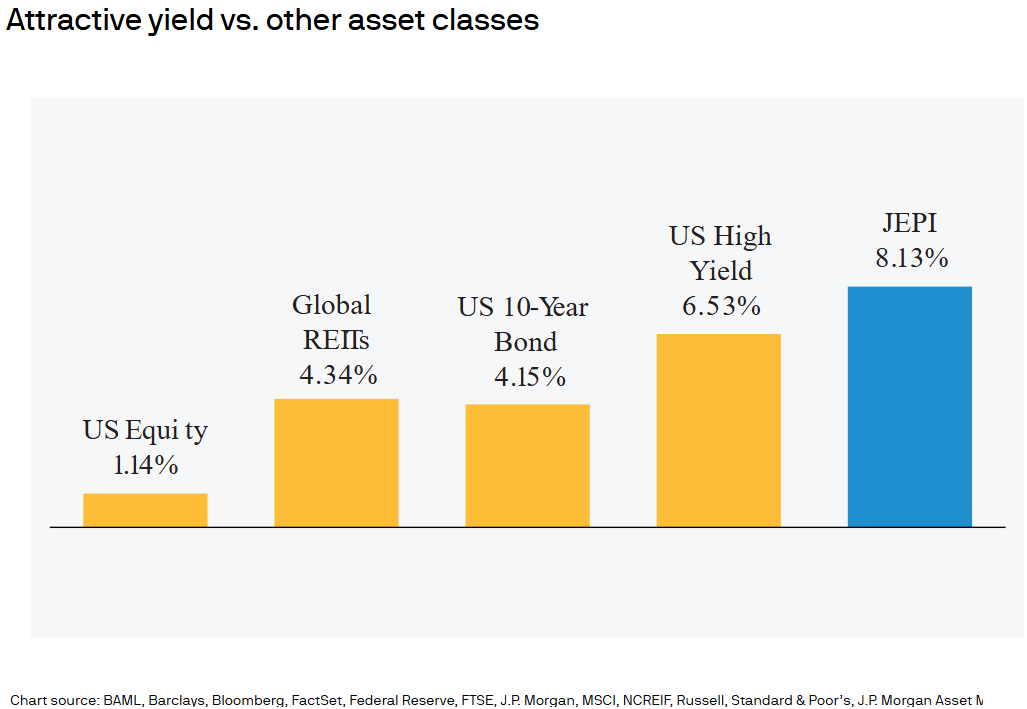
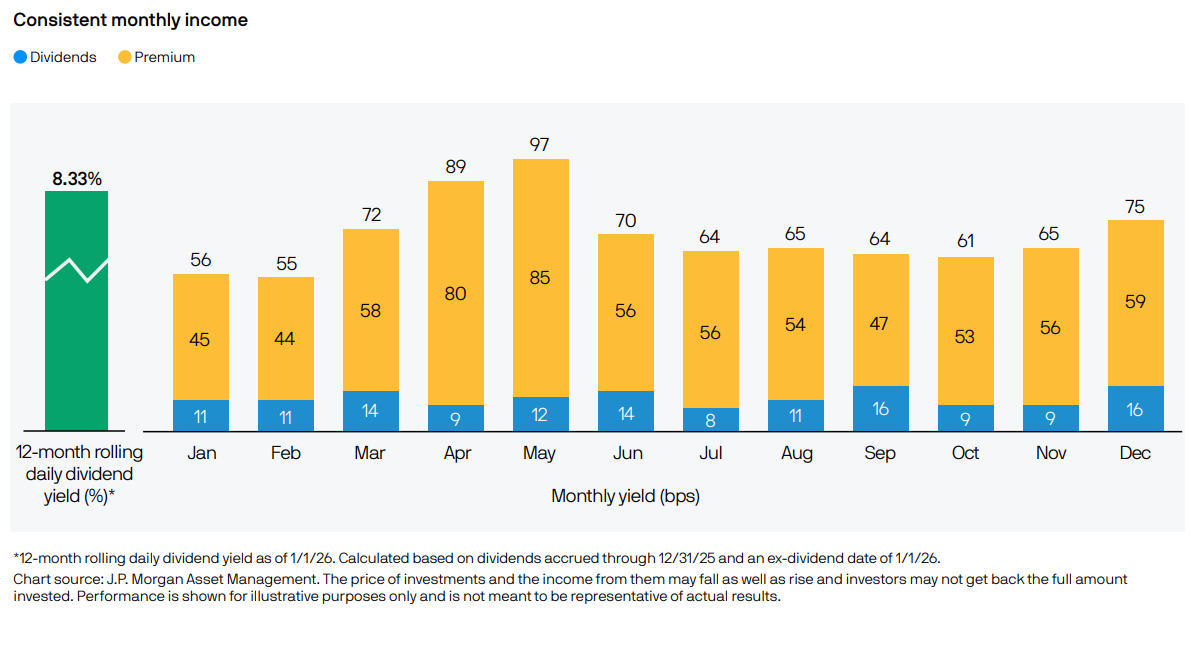
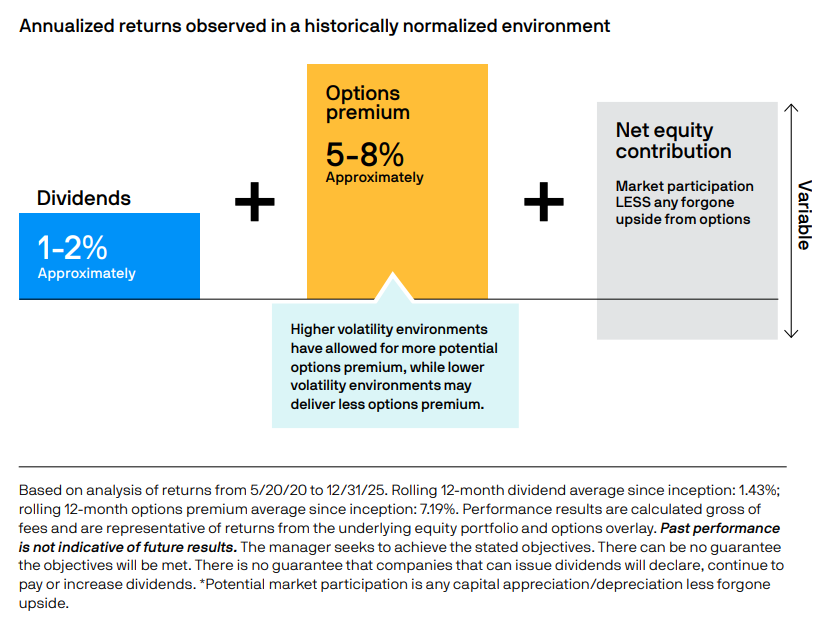
JEPI:
Follow us on Instagram, and YouTube.
Check out our t-shirts, stickers, coffee mugs, and other swag here.
Subscribe here:
Nothing in this blog constitutes investment advice, performance data or any recommendation that any particular security, portfolio of securities, transaction or investment strategy is suitable for any specific person. Any mention of a particular security and related performance data is not a recommendation to buy or sell that security. Any opinions expressed herein do not constitute or imply endorsement, sponsorship, or recommendation by Ritholtz Wealth Management or its employees.
The Compound Media, Inc., an affiliate of Ritholtz Wealth Management, received compensation from the sponsor of this advertisement. Inclusion of such advertisements does not constitute or imply endorsement, sponsorship or recommendation thereof, or any affiliation therewith, by the Content Creator or by Ritholtz Wealth Management or any of its employees. Investing in speculative securities involves the risk of loss. Nothing on this website should be construed as, and may not be used in connection with, an offer to sell, or a solicitation of an offer to buy or hold, an interest in any security or investment product.
Important Disclaimers from JP Morgan: https://am.jpmorgan.com/us/en/asset-management/adv/disclosures/talkyourbookpodcastapril2026/
Investors should carefully consider the investment objectives and risks as well as charges and expenses of a mutual fund or ETF before investing. The prospectus contains this and other information about the mutual fund and ETF. Read carefully before investing. To obtain a prospectus for mutual funds, call 1-800-480-4111; for ETFs, call 1-844-4JPM-ETF.
This communication has been prepared for information purposes only and is not intended to provide, and should not be relied on for, accounting, legal or tax advice or investment recommendations Investors should consult their own tax advisors regarding the tax consequences of an investment in an ETF.
JPMorgan paid for participation in the production of this podcast
The price of equity securities may fluctuate rapidly or unpredictably due to factors affecting individual companies, as well as changes in economic or political conditions. These price movements may result in loss of your investment.
JEPI and JEPQ: Investments in Equity-Linked Notes (ELNs) are subject to liquidity risk, which may make ELNs difficult to sell and value. Lack of liquidity may also cause the value of the ELN to decline. Since ELNs are in note form, they are subject to certain debt securities risks, such as credit or counterparty risk. Should the prices of the underlying instruments move in an unexpected manner, the Fund may not achieve the anticipated benefits of an investment in an ELN, and may realize losses, which could be significant and could include the Fund’s entire principal investment.
ROCY and ROCQ: Yield represents annualized fund distributions, which may be taxed as qualified or ordinary dividends, capital gains, or return of capital. The funds’ investment strategies seek to generate return of capital distributions, but no assurance can be given. In certain market environments, essentially all distributions could be taxable to an investor as ordinary dividend income. Amounts paid in excess of an ETF’s current and accumulated earnings are treated for tax purposes first as a tax-free return of capital until an investor’s cost basis is reduced to zero; further amounts are taxed as capital gains. Return of capital isn’t taxed when received but lowers an investor’s basis, which can increase future taxes (or reduce losses) when you sell. Any distribution reduces the Fund’s NAV. Return of capital (ROC), which is not guaranteed, refers to the portion of a distribution from an investment that is not considered taxable income, because, for tax purposes, it is treated as a return of part of the original investment. ROC distributions are not taxed currently; however, they will generally lower an investor’s adjusted basis in an investment. By lowering basis, such distributions will ultimately result in a proportionately higher capital gain (or a smaller capital loss) when the investor sells the shares. Some investors might prefer the ability to delay taxes. ROC distributions in excess of an investor’s tax basis in the investment will generally be treated for tax purposes as capital gain.
ROCY, ROCQ, and JOYT: Selling call options brings in upfront cash and can lower risk, but it caps upside if stocks rise. Buying call options risks losing the premium if they expire worthless. In unusual or illiquid markets, these strategies may not work as intended, may not reduce volatility as hoped, and can result in losses.
JEPQ and ROCQ: Nasdaq®, Nasdaq-100 Index®, Nasdaq 100® and NDX® are registered trademarks of Nasdaq, Inc. (which with its affiliates is referred to as the “Corporations”) and are licensed for use by J.P. Morgan Investment Management Inc. JPMorgan Nasdaq Equity Premium Income ETF (the “Fund”) has not been passed on by the Corporations as to its legality or suitability. The Fund is not issued, endorsed, sold, or promoted by the Corporations. THE CORPORATIONS MAKE NO WARRANTIES AND BEAR NO LIABILITY WITH RESPECT TO THE FUND.
JPMorgan Distribution Services, Inc.; member FINRA
