

A lot of crazy stuff has happened this decade.
The pandemic of course:

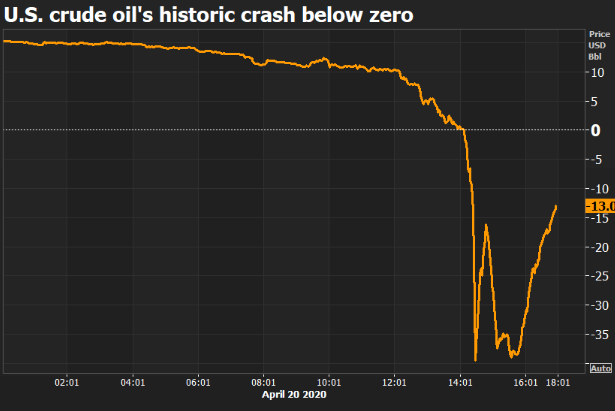
Which caused oil prices to go negative (I still can’t quite believe this happened even though it makes sense given the circumstances):
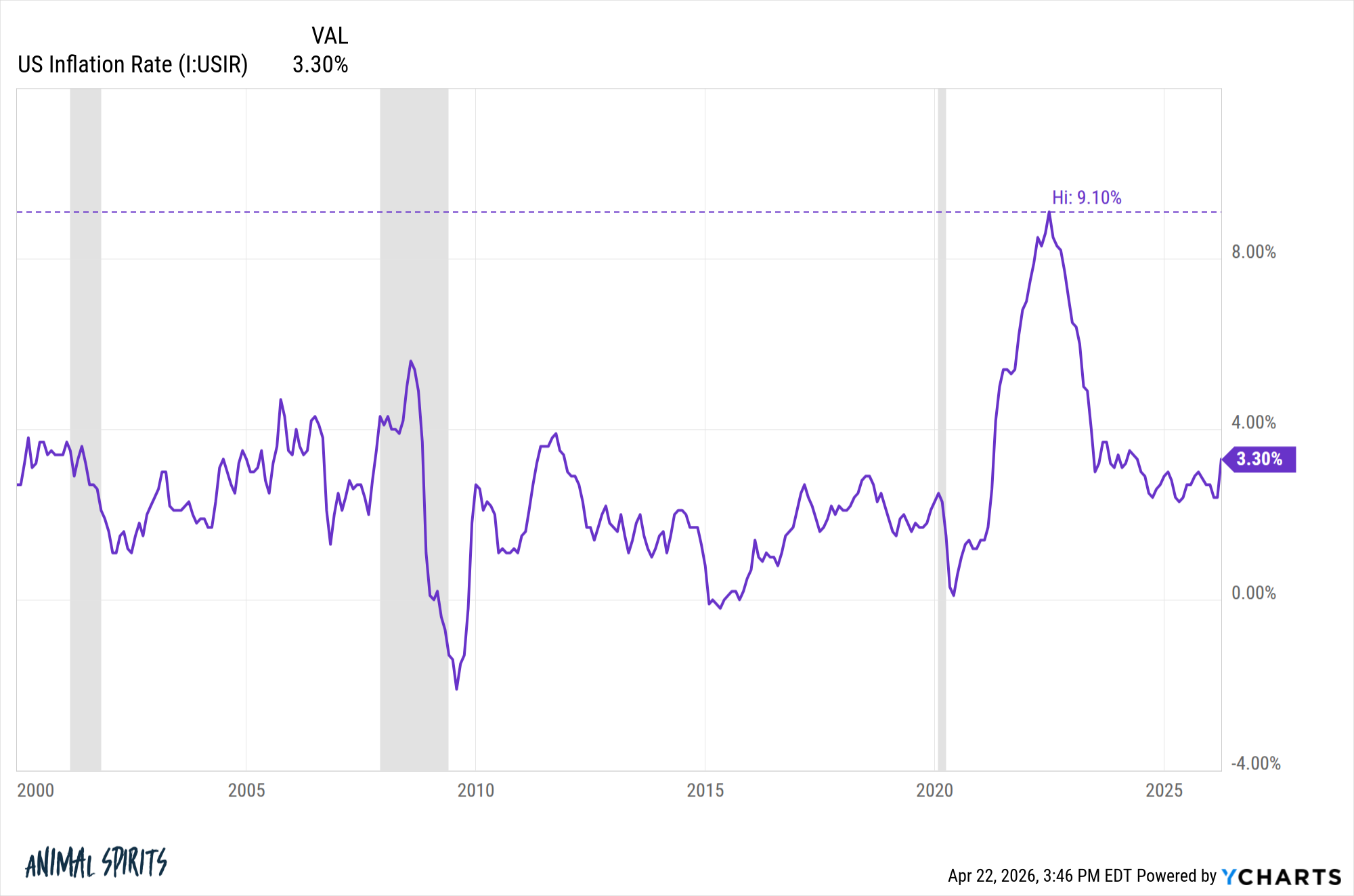
The trillions of dollars in government spending combined with a supply chain shock led to 9% inflation, the highest levels in four decades:
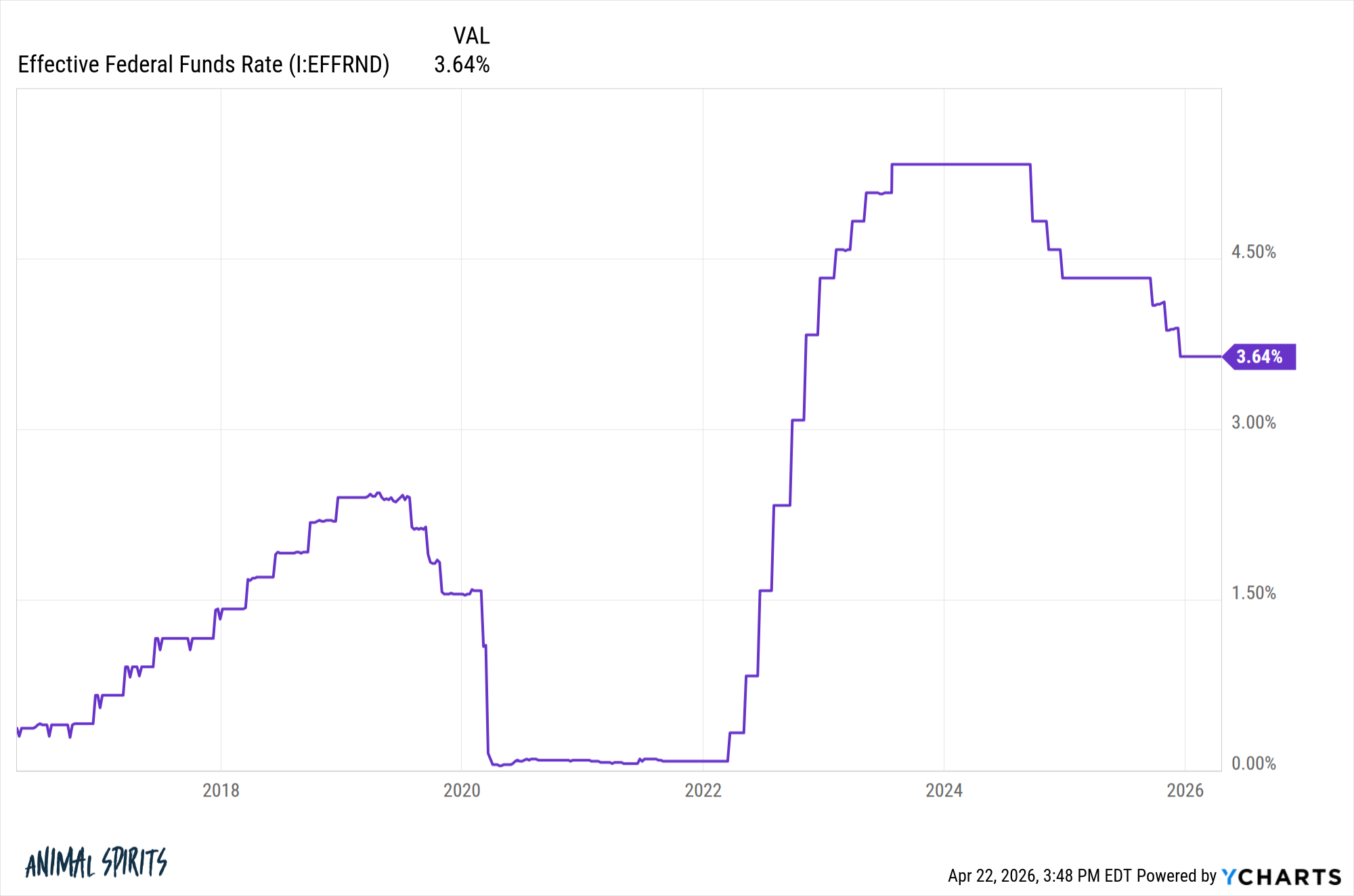
Which caused the Fed to raise rates from 0% to 5% in no time:
The stock market has experienced plenty of volatility along the way:
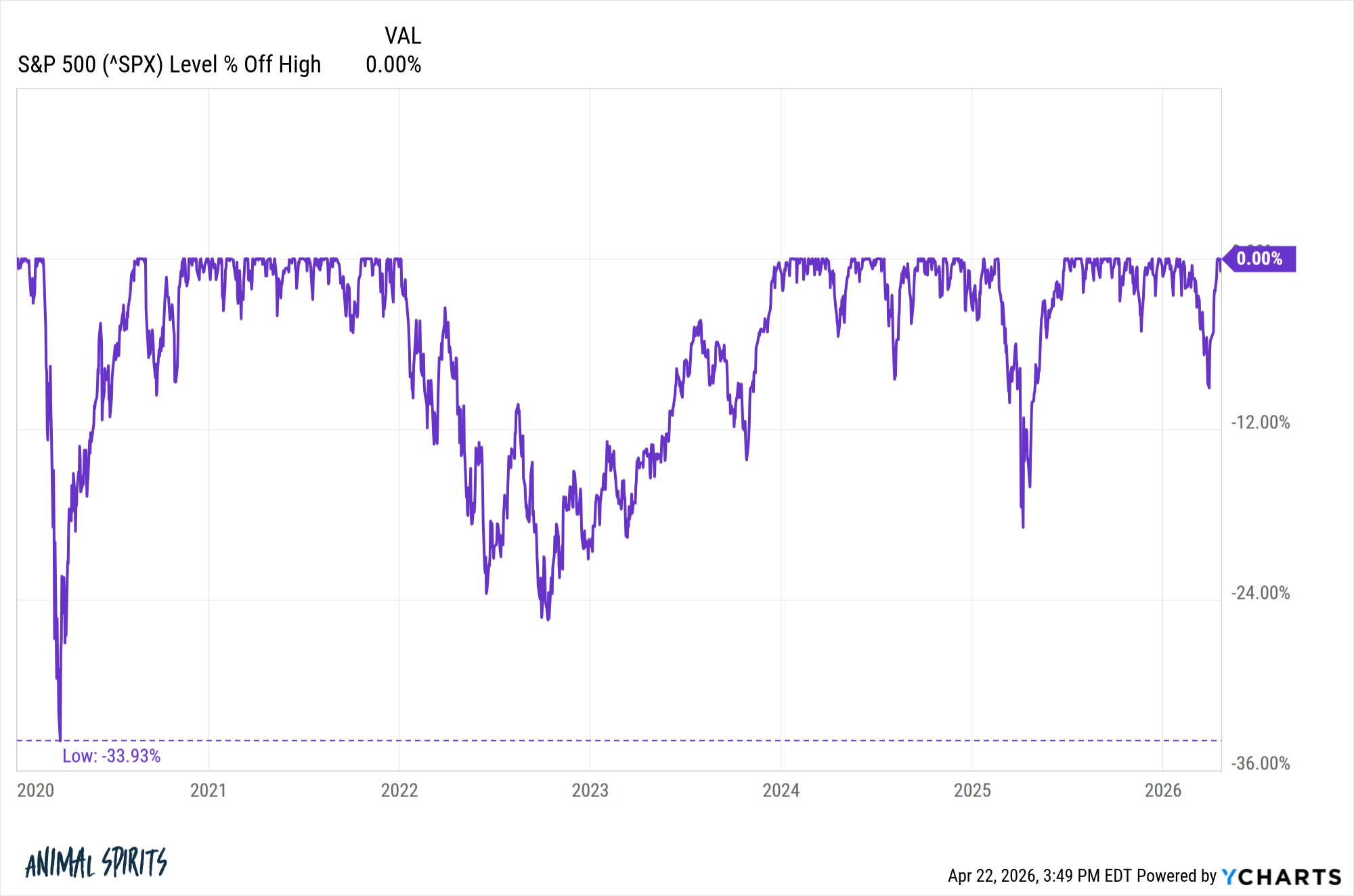
There was the Covid crash, the 2022 inflation bear, the Liberation Day plunge and the minor correction from the war this year.
Plus, the rise in rates and inflation gave investors the worst bond bear market in history:
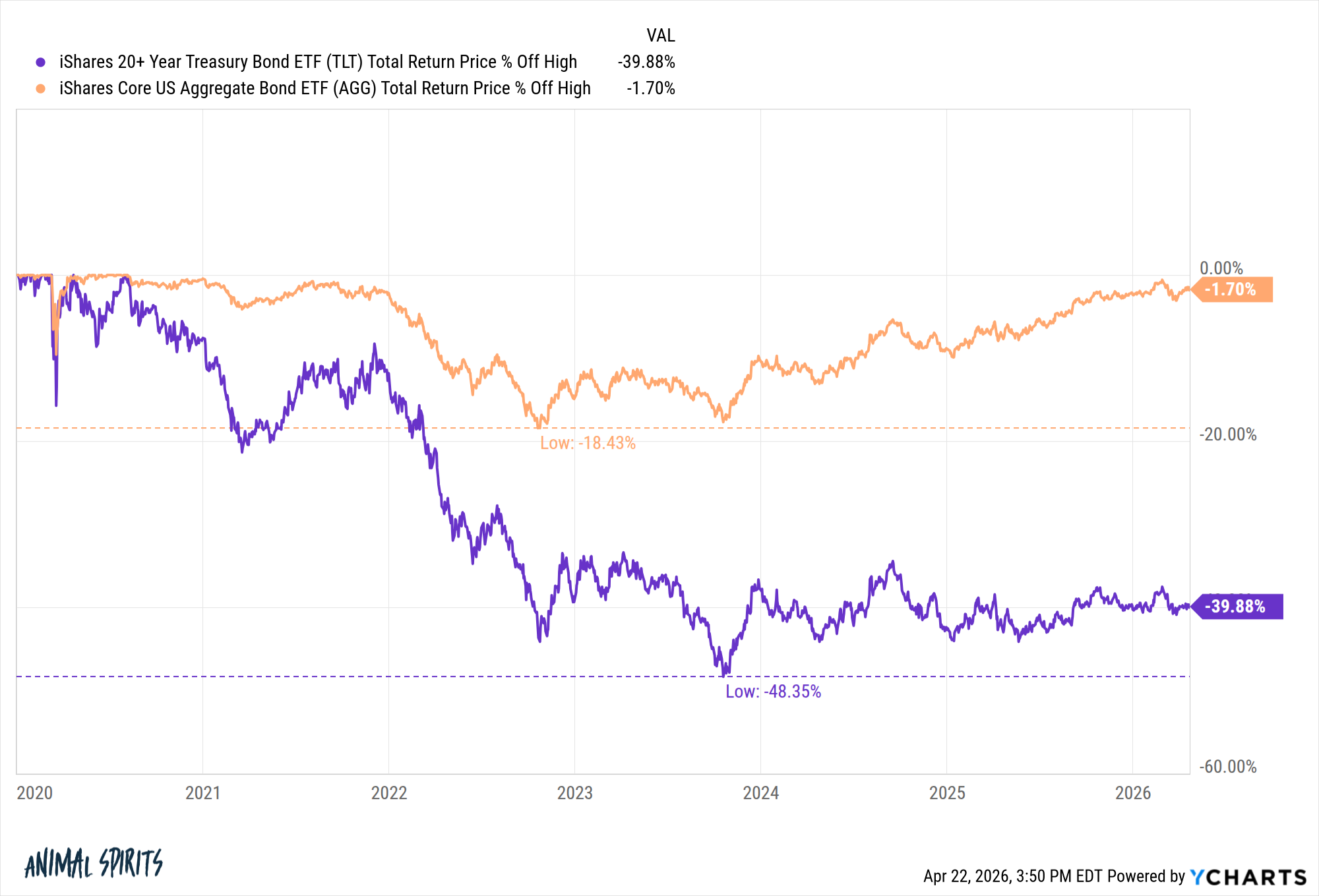
And yet…the stock market has boomed in the Roaring 20s:
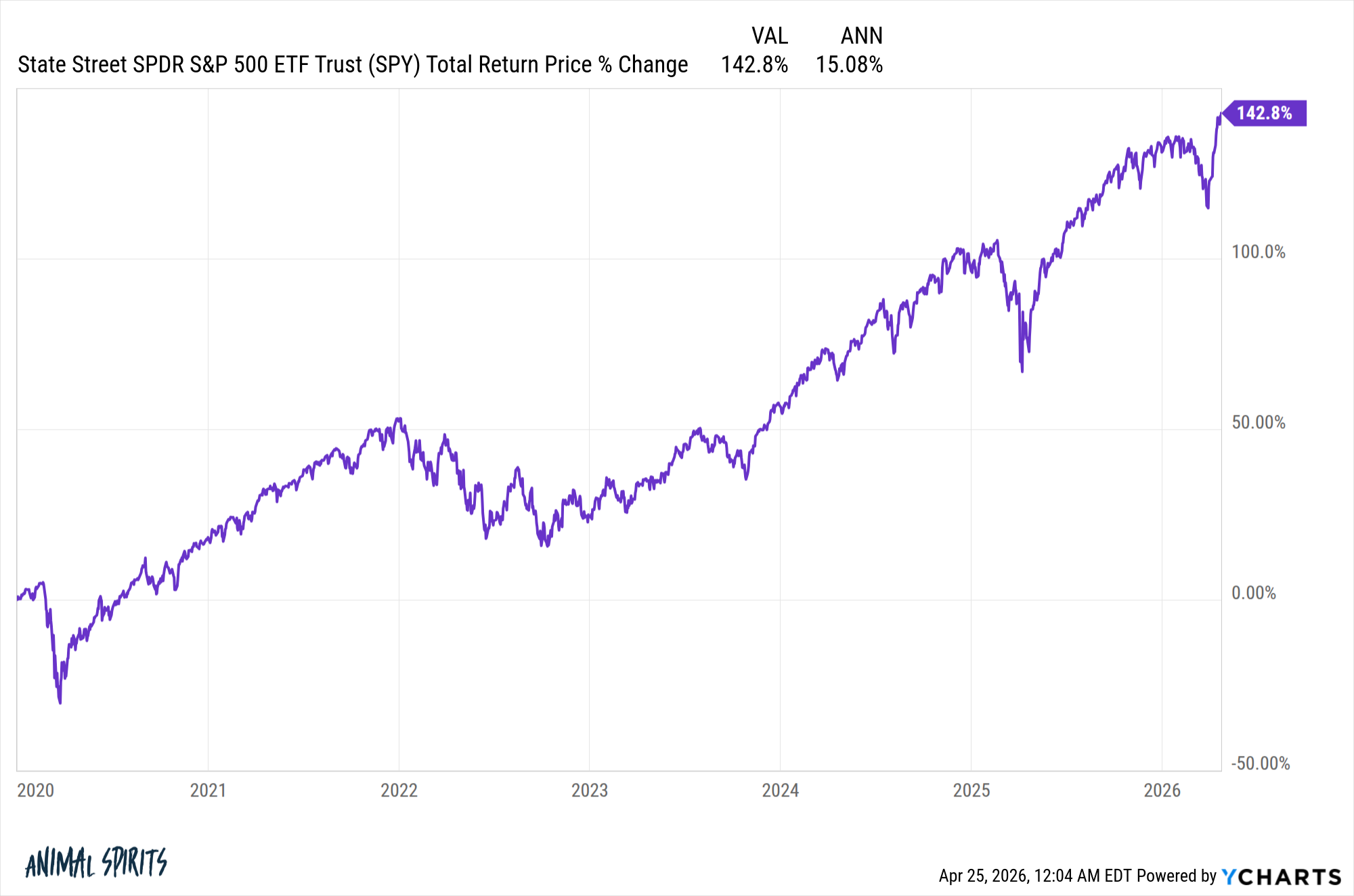
The S&P 500 is up 15% per year.
In fact, the 2020s have an even better return (so far) than the 2010s, which had annualized returns of 13.4%.
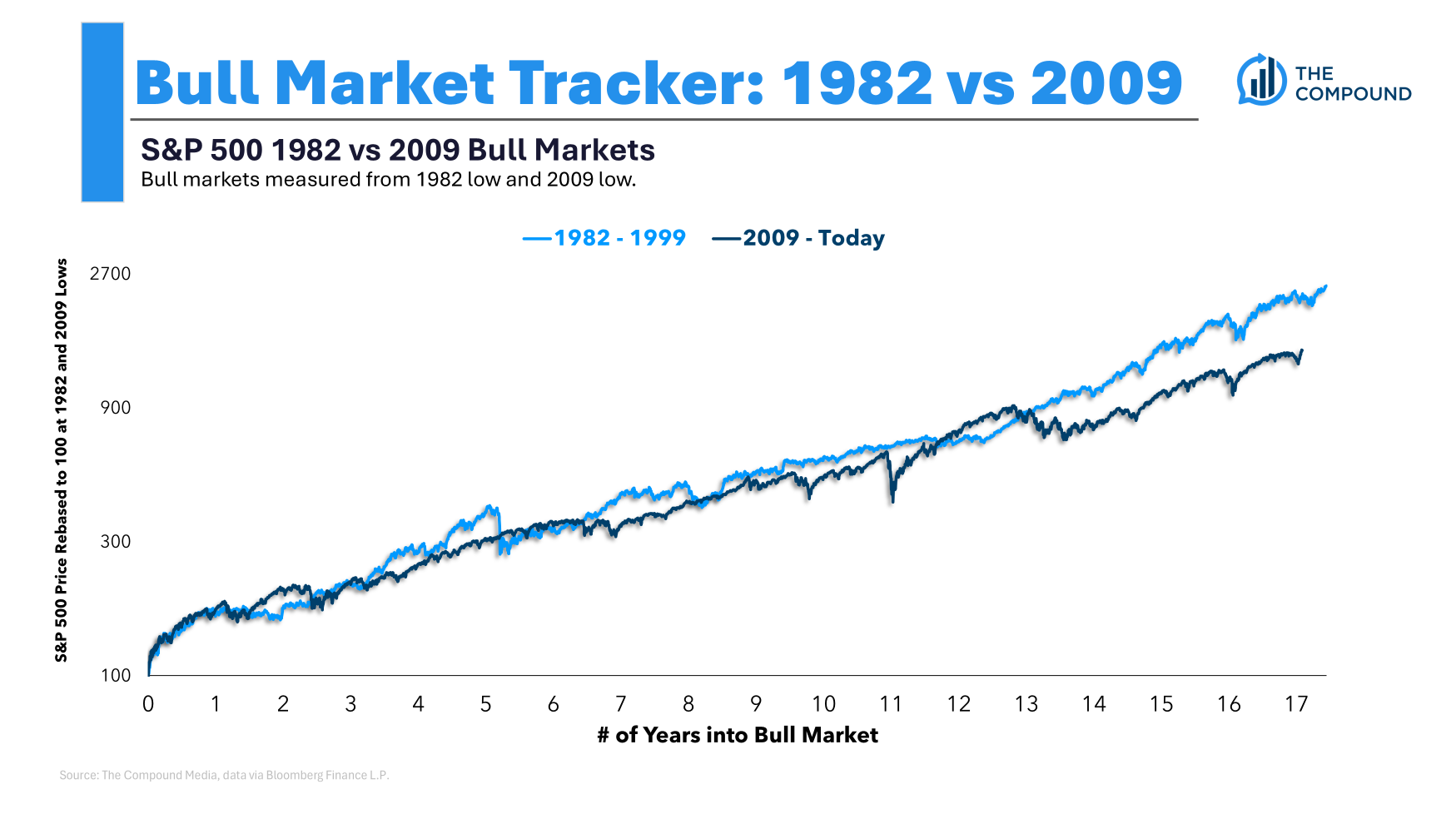
If you start from when things turned around in March of 2009 following the Great Financial Crisis, the stock market is up nearly 17% per year.1
That’s 17 year of 17% annual returns.
This bull market is a stone’s throw from quite possibly the greatest American bull market of all-time:
Some might quibble with the fact that I’m starting a bull market from a bear market bottom. Fine, whatever.
The point remains — we are now fast approaching nearly two decades of extraordinary returns in U.S. stocks.
Selling your stocks during a bear market can be devastating to your performance but missing out on a bull market of this magnitude can be even more harmful to your portfolio.
If you avoided all of the permabears telling you the end is near the entire way up, nice work. There have been all sorts of reasons to sell along the way.
At some point the fun will come to an end. It always does.
There will be down years, long bear markets, a financial crisis and maybe even a recession. Those are still possible, right?
My advice?
Enjoy the bull market while it lasts. This one is turning into an all-timer.
Further Reading:
New All-Time Highs
This content, which contains security-related opinions and/or information, is provided for informational purposes only and should not be relied upon in any manner as professional advice, or an endorsement of any practices, products or services. There can be no guarantees or assurances that the views expressed here will be applicable for any particular facts or circumstances, and should not be relied upon in any manner. You should consult your own advisers as to legal, business, tax, and other related matters concerning any investment.
The commentary in this “post” (including any related blog, podcasts, videos, and social media) reflects the personal opinions, viewpoints, and analyses of the Ritholtz Wealth Management employees providing such comments, and should not be regarded the views of Ritholtz Wealth Management LLC. or its respective affiliates or as a description of advisory services provided by Ritholtz Wealth Management or performance returns of any Ritholtz Wealth Management Investments client.
References to any securities or digital assets, or performance data, are for illustrative purposes only and do not constitute an investment recommendation or offer to provide investment advisory services. Charts and graphs provided within are for informational purposes solely and should not be relied upon when making any investment decision. Past performance is not indicative of future results. The content speaks only as of the date indicated. Any projections, estimates, forecasts, targets, prospects, and/or opinions expressed in these materials are subject to change without notice and may differ or be contrary to opinions expressed by others.
The Compound Media, Inc., an affiliate of Ritholtz Wealth Management, receives payment from various entities for advertisements in affiliated podcasts, blogs and emails. Inclusion of such advertisements does not constitute or imply endorsement, sponsorship or recommendation thereof, or any affiliation therewith, by the Content Creator or by Ritholtz Wealth Management or any of its employees. Investments in securities involve the risk of loss. For additional advertisement disclaimers see here: https://www.ritholtzwealth.com/advertising-disclaimers
Please see disclosures here.
