

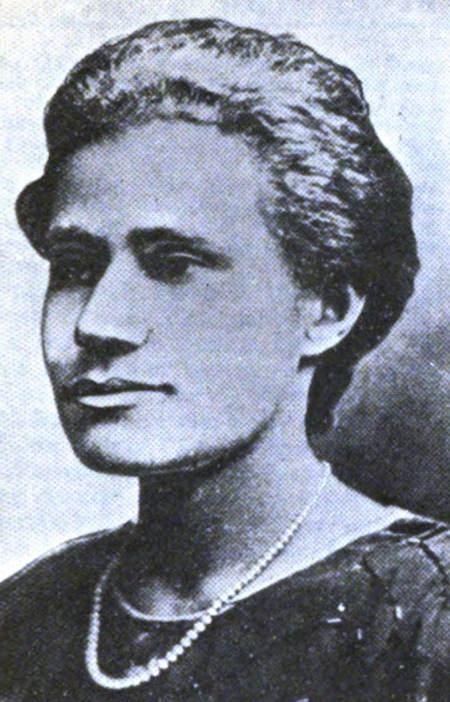
Elizabeth Ross (Haynes) was the daughter of formerly enslaved parents. She was born on July 31, 1883, in Mount Willing, Alabama. In 1900, at the State Normal School in Montgomery, Alabama, she graduated first in her class. She was awarded a scholarship to Fisk University where she received a bachelor’s degree in 1903. During the summers of 1905, 1906, and 1907 she attended the University of Chicago Graduate School. She studied sociology at Columbia University in 1922-1923 and earned a master’s degree. Her thesis was “Two Million Negro Women at Work.”.
Haynes became a charter member of the Tau Omega chapter of Alpha Kappa Alpha Sorority, Inc. in New York City. She helped sponsor the sorority’s annual literacy competition open to high school women in New York and New Jersey. She recruited Langston Hughes and Countee Cullen to serve as judges. She also served as a member of Tau Omega’s Speakers Bureau.
She became the first African American to serve as national secretary of the Young Women’s Christian Association (YWCA). On December 14, 1910, she married sociologist George Edmund Haynes. Son George, Jr., arrived on July 17, 1912.

Although her first stint with the YWCA was paid employment, she left after two and a half years because of marriage and family responsibilities. However, she was an active volunteer for the YWCA for more than 20 years. She was the first African American on the national board of the YWCA.
In 1921, she authored Unsung Heroes which was published by DuBois and Dill in 1921. She dedicated the book to Fisk University. The book highlights the contributions of African Americans.

Haynes was elected coleader of the 21st Assembly District of New York in 1935. Two years later she was appointed to the New York State Temporary Commission on the Condition of the Urban Colored Population. She was the only woman to be appointed to that commission. She also served on the Mayor’s City Planning Commission, Harlem Better Schools Committee and the National Advisory Committee on Women’s Participation in the 1939 World’s Fair.
During World War II. She worked in Washington DC as a “Dollar a Year Woman” serving in the Women’s Bureau of the U.S. Department of Labor. She was also a volunteer in the Division of Negro Economics.
In 1952, she wrote The Black Boy of Atlanta, a biography of R.R. Wright. She died on October 26, 1953 at the age of 70.

