

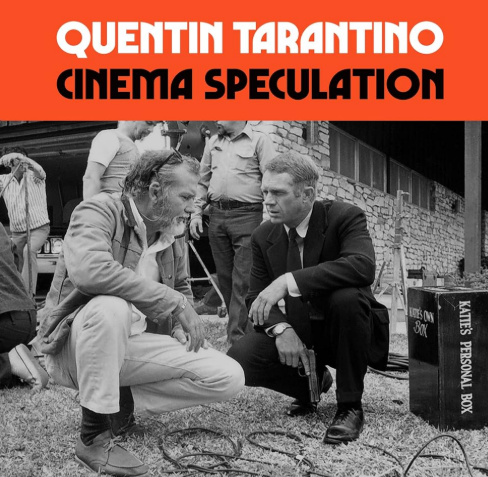
One of the best books I’ve read in the past year or so is Quentin Tarantino’s Cinema Speculation.
The concept of the book is Tarantino reviews a bunch of his favorite movies from the 1970s — Bullitt, Dirty Harry, Deliverance, The Getaway, Taxi Driver, etc. — and offers some critiques, praise and thoughts from the perspective of a director and fan of movies.
I’ve never seen most of the movies before, but it was fascinating to view them through the lens of a great director like this.
Tarantino also writes about how he became so enamored with films from an early age.
His mother took him to the movies on a weekly basis. Most of them were movies that other kids weren’t allowed to watch. He was far too young to see MASH, The French Connection, or The Godfather.
I like the story about what his mom said when confronted with this reality:
At some point, when I realized I was seeing movies other parents weren’t letting their children see, I asked my mom about it.
She said, “Quentin, I worry more about you watching the news. A movie’s not going to hurt you.”
Context was the key:
Just making a list of the wild violent images I witnessed from 1970 to 1972 would appall most readers. Whether it was James Caan being machine-gunned to death at the toll booth, or Moe Greene being shot in the eye in The Godfather. That guy cut in half by the airplane propeller in Catch-22. Stacy Keach’s wild ride on the side of the car in The New Centurions. Or Don Stroud shooting himself in the face with a tommy gun in Bloody Mama. But just listing grotesque moments–out of context of the movies they were in–isn’t entirely fair to the films in question. And my mother’s point of view–that she later explained to me–was always a question of context. In those films, I could handle the imagery, because I understood the story.
I love this take that watching the news is much worse than watching movies with mature content.1 The news is far more depressing than even watching Manchester by the Sea.
Many financial topics are like this. You want financial decisions to be black and white but most of the time they exist in a shade of gray.
Debt requires context. If you’re making minimum payments on your credit card that’s insanely bad debt.
But if you can afford to service the debt, leverage can be a powerful tool that offers valuable flexibility.
Spending requires context. If you overspend on material possessions in lieu of savings that’s a big problem.
If you have the means but you still don’t spend money on the things that matter most to you, that’s also a problem.
Frugality requires context. When you’re young and just starting out, frugality is necessary. Looking for ways to cut back is often the only way to get ahead.
If you’re wealthy and still driving across town because the gas is three cents a gallon cheaper, you might have a problem.
Investment risk requires context. Most arguments about investing and the markets are really about differences in time horizon.
If you’re spending the money soon or you’re day trader or just pay way too much attention to the day-to-day market moves, then the short-term is important to you.
But if you have a time horizon that can be measured in years or decades, the long-term is the only thing that does (or should) matter to you.
Risk is time-dependent.
Taxes require context. Tax loss harvesting is a wonderful development of the automated investment era. It’s never been easier to take advantage of losses but it also means you lost money!
Paying capital gains taxes can be painful but it also means you made money!
Paying taxes means you won the game of investing. It’s a good thing, even though it can feel painful.
Happiness requires context. Financial happiness is an odd thing because feelings of success or failure when it comes to money are almost always relative.
When you have friends who make less than you or have less money than you it can make the relationship awkward.
When you have friends who make more than you or have more money than you it can make the relationship awkward.
But those feelings are mostly about your own hang-ups. There is no perfect amount of income or net worth.
There will always be people who are richer and poorer than you are.
Get used to it and learn to live with what you have. People having more or less than you do are not going to hurt you…unless you let them.
Further Reading:
The News is Making You Miserable
1Obviously, not all children are emotionally developed enough to deal with these types of movies. That’s another component of the context piece.
