


There’s never been a better time to be an individual investor than right now.
Lower costs. Improved fund structures. More investment options than ever. Better tools to defer taxes. Research and data that would have cost tens of thousands of dollars in the past are now free. More in-depth analysis. Loads of efficient investing platforms with useful technology that make it easier to invest.
It’s the golden age of investing.
Yet this golden age is a double-edged sword.
Endless investment options can create a paradox of choice, where you’re constantly tempted to invest in the hot new thing.
Lower transaction costs make it easier to access the markets, but they also lower barriers to entry and exit. The cost to buy and sell has never been lower, but behavioral costs can be much higher from over-trading and trying to time the market.
More data and research are available, but a plethora of back-testing tools also lets you torture the data to tell yourself anything you want to hear. AI is going to supercharge this trend. Investors will constantly be tinkering at the first sign of trouble with a new rules-based strategy created by AI.
The number of investing podcasts, blogs, newsletters, YouTube channels, and social media experts is a wonderful leap forward for learning, but it’s a firehose. It’s much harder to know who to trust and how to filter your information sources.
Plus, the speed of information means market cycles are moving at the speed of light. The moves are happening faster and faster as investors race to price in anything and everything instantaneously.
We just had this happen:
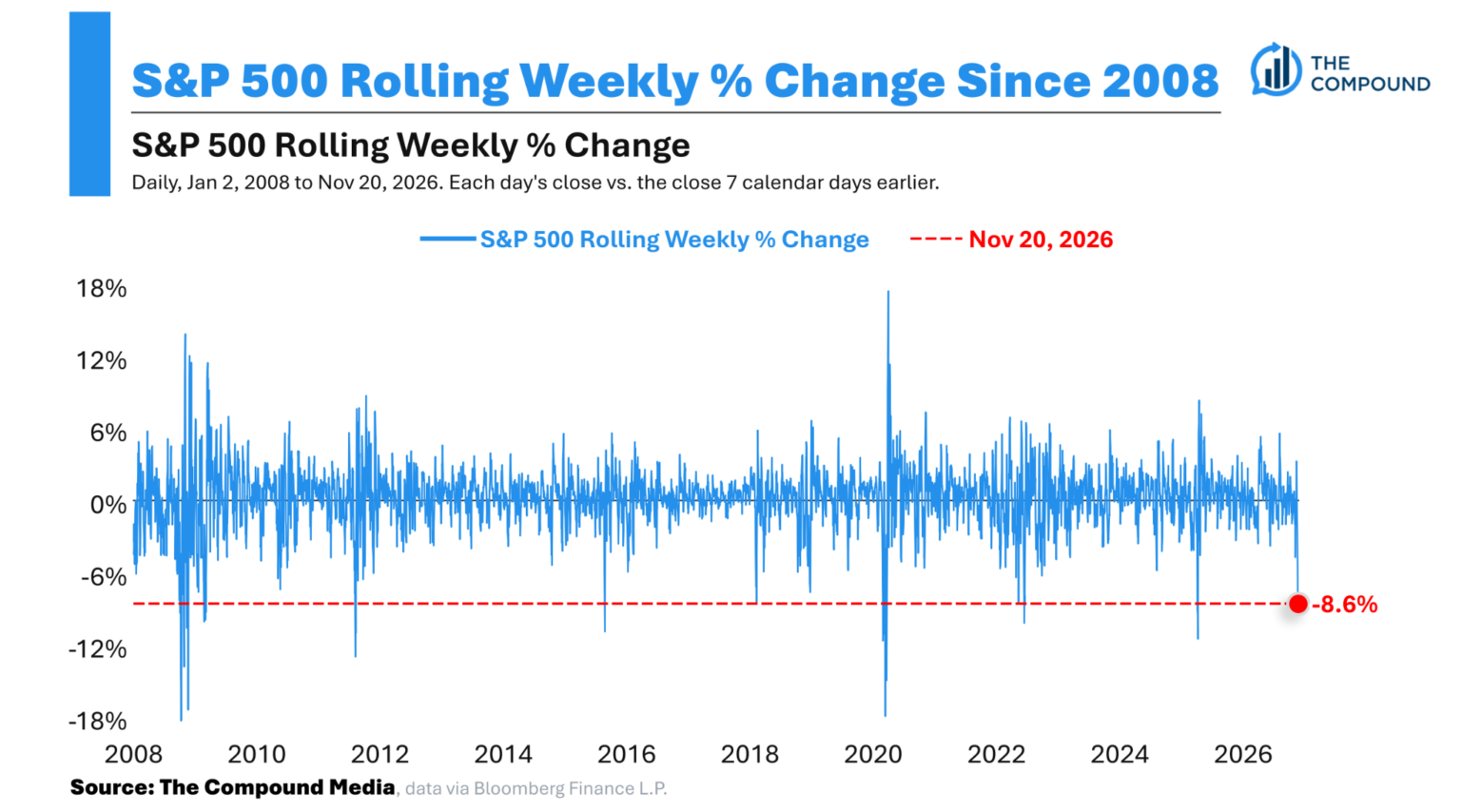
The stock market crashed in a week. The following Monday the market raced higher in something of a reverse-crash upwards. We’re experiencing full market cycles in a matter of days, weeks or months.
I don’t see this trend slowing down anytime soon.
AI will likely amplify the moves even more because it invites even more of a herd mentality into the market.
In a new whitepaper, Orbis described it like this:
Our hypothesis is that AI is more likely to be the greatest narrative transmission engine ever built, by throwing orders of magnitude more computational power at prevailing narratives and entrenched human behaviours. If investors have behaved like sheep in the past, AI may simply create herds of “turbo sheep” that form faster and run harder than ever in the same direction.
I concur.
You’re already seeing this with hedge funds.
In the good old days, these go-anywhere funds painted themselves as contrarians who went against the grain by investing where the puck was going.
Now they all invest where the puck currently is.
Just look at the herding by hedge funds in tech stocks recently (via Goldman Sachs):
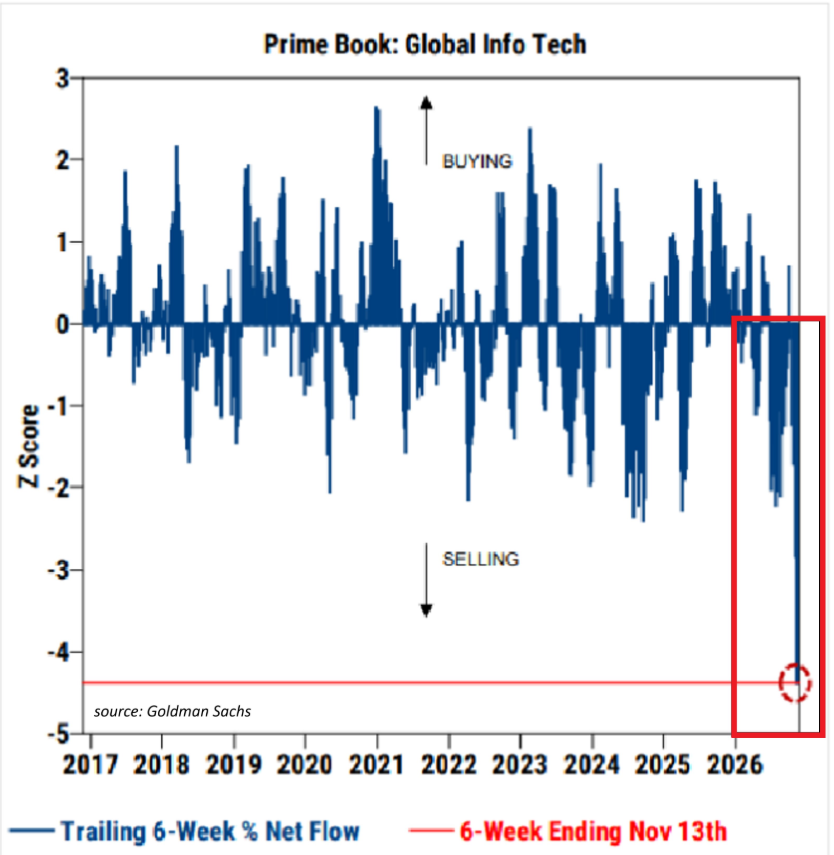
As more firms rely on AI and algorithms, there will be even more turbo sheep.
The same will happen with many individual investors.
All of these moves force you into thinking and acting for the short-term.
There has never been a better time to be a long-term investor but it’s never been harder to behave and act like one.
The good news is there are also more tools to combat the Siren Song of the markets.
Automation is the answer as long as you can keep your hands off the steering wheel.
Sometimes you need self-imposed speed bumps.
Michael and I talked about wild market cycles, long-term investing and much more on this week’s Animal Spirits video:
Subscribe to The Compound so you never miss an episode.
Further Reading:
Ignoring the Noise is Impossible
Now here’s what I’ve been reading lately:
Books:
This content, which contains security-related opinions and/or information, is provided for informational purposes only and should not be relied upon in any manner as professional advice, or an endorsement of any practices, products or services. There can be no guarantees or assurances that the views expressed here will be applicable for any particular facts or circumstances, and should not be relied upon in any manner. You should consult your own advisers as to legal, business, tax, and other related matters concerning any investment.
The commentary in this “post” (including any related blog, podcasts, videos, and social media) reflects the personal opinions, viewpoints, and analyses of the Ritholtz Wealth Management employees providing such comments, and should not be regarded the views of Ritholtz Wealth Management LLC. or its respective affiliates or as a description of advisory services provided by Ritholtz Wealth Management or performance returns of any Ritholtz Wealth Management Investments client.
References to any securities or digital assets, or performance data, are for illustrative purposes only and do not constitute an investment recommendation or offer to provide investment advisory services. Charts and graphs provided within are for informational purposes solely and should not be relied upon when making any investment decision. Past performance is not indicative of future results. The content speaks only as of the date indicated. Any projections, estimates, forecasts, targets, prospects, and/or opinions expressed in these materials are subject to change without notice and may differ or be contrary to opinions expressed by others.
The Compound Media, Inc., an affiliate of Ritholtz Wealth Management, receives payment from various entities for advertisements in affiliated podcasts, blogs and emails. Inclusion of such advertisements does not constitute or imply endorsement, sponsorship or recommendation thereof, or any affiliation therewith, by the Content Creator or by Ritholtz Wealth Management or any of its employees. Investments in securities involve the risk of loss. For additional advertisement disclaimers see here: https://www.ritholtzwealth.com/advertising-disclaimers
Please see disclosures here.
