

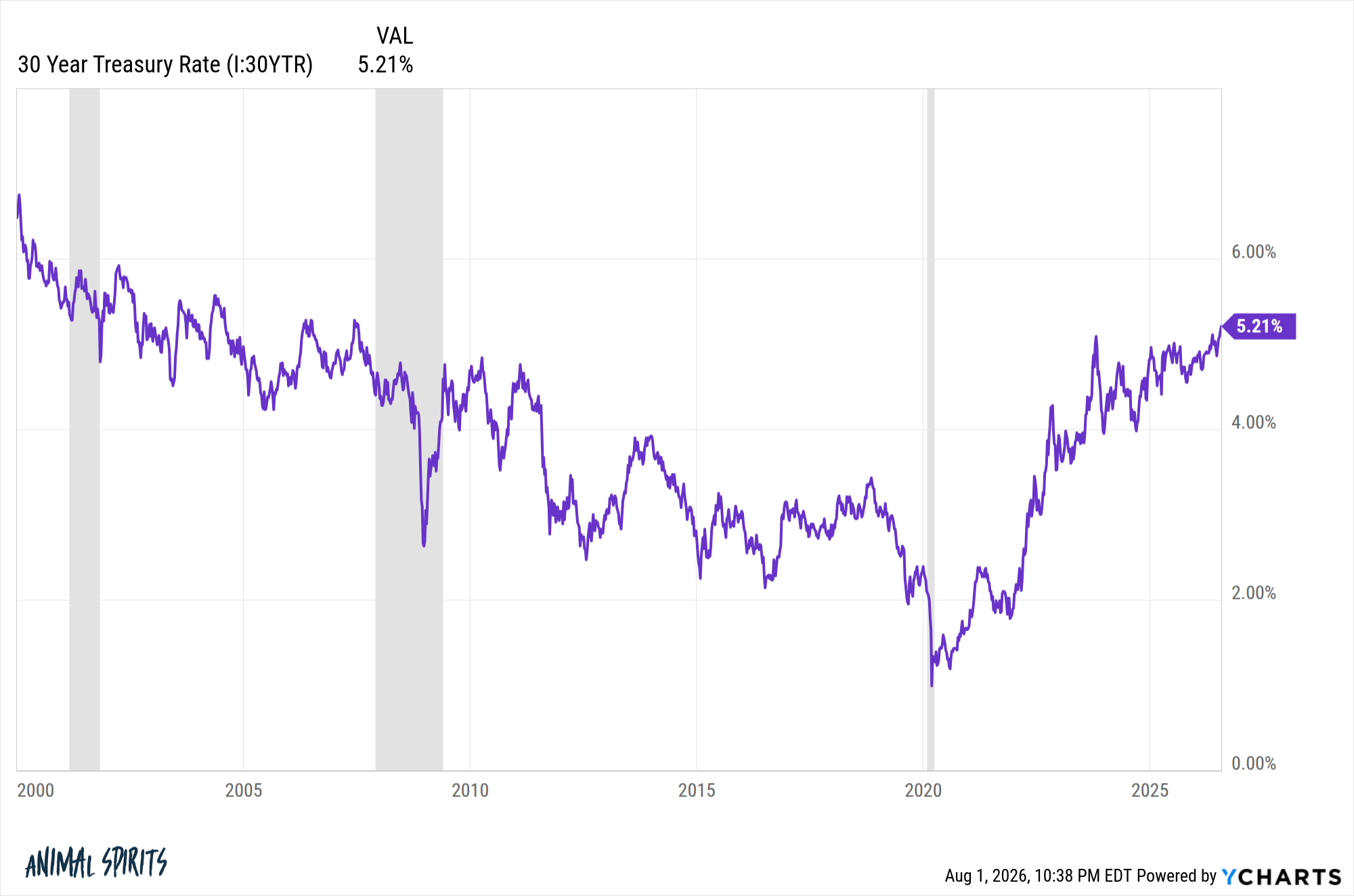
Long-term government bond yields are on the rise yet again:
On the one hand, 30 year Treasury yields are now the highest they have been since 2007, right before the onset of the Great Financial Crisis. Long bonds yielded around 1% in at the Covid crash nadir so they’ve come up a lot this decade.
On the other hand, the average yield in the past 50 years is 6.2%. From 1977 through the summer of 2001, yields on long bonds were never lower than they are today.
If you showed the current yield curve to students in an Econ 101 class, they would tell you it looks normal:
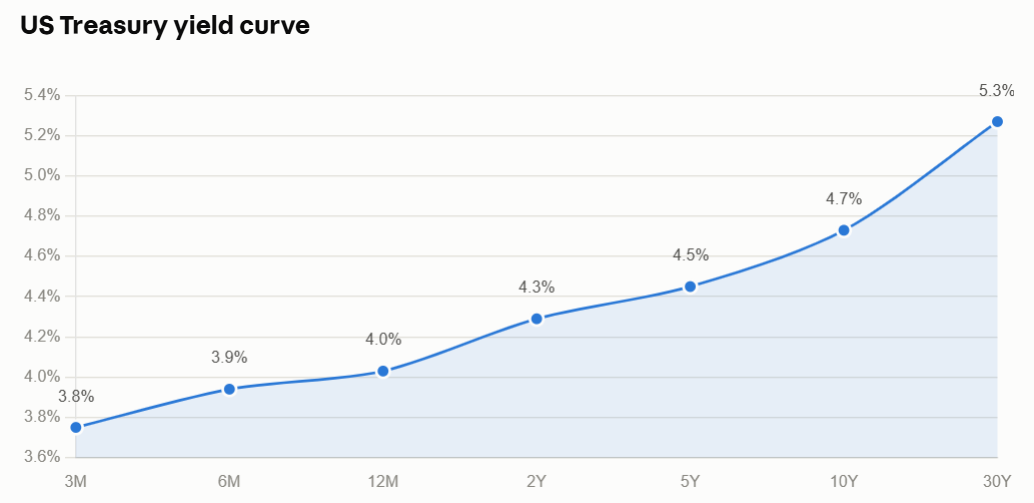
It’s not so much the current level of rates that has macro people worried.
It’s the speed of the rise in rates combined with the stickiness of inflation, the size of government debt, the endless deficits and seemingly unwillingness of anyone in our government to do anything about it.
I’m not so worried about a government debt crisis. Maybe I’ll regret this stance in the future but I simply don’t see what the alternative is to U.S. Treasuries or the dollar.
And it’s not like the government funds itself exclusively on long-term debt. Look at the breakdown by maturity from the pseudonymous Jesse Livermore:
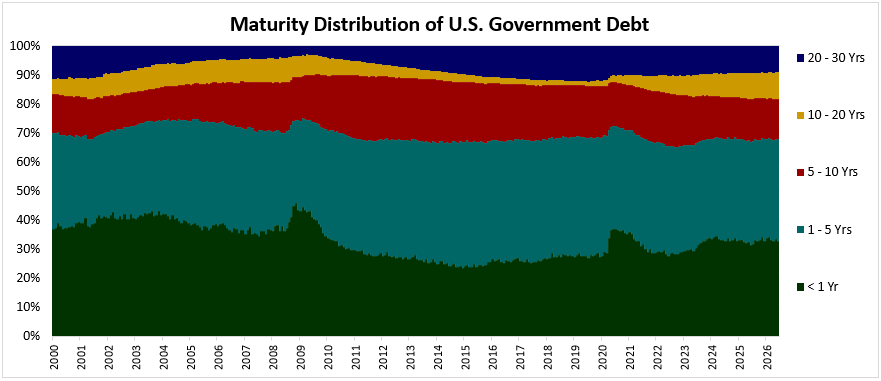
Unless there’s a buyer’s strike on T-bills, we can always fund the government on short-term paper.
This could become a problem at some point but my bigger concern it what the rise in long-term yields means for the housing market.
Mortgage rates are closing in on 7% again:
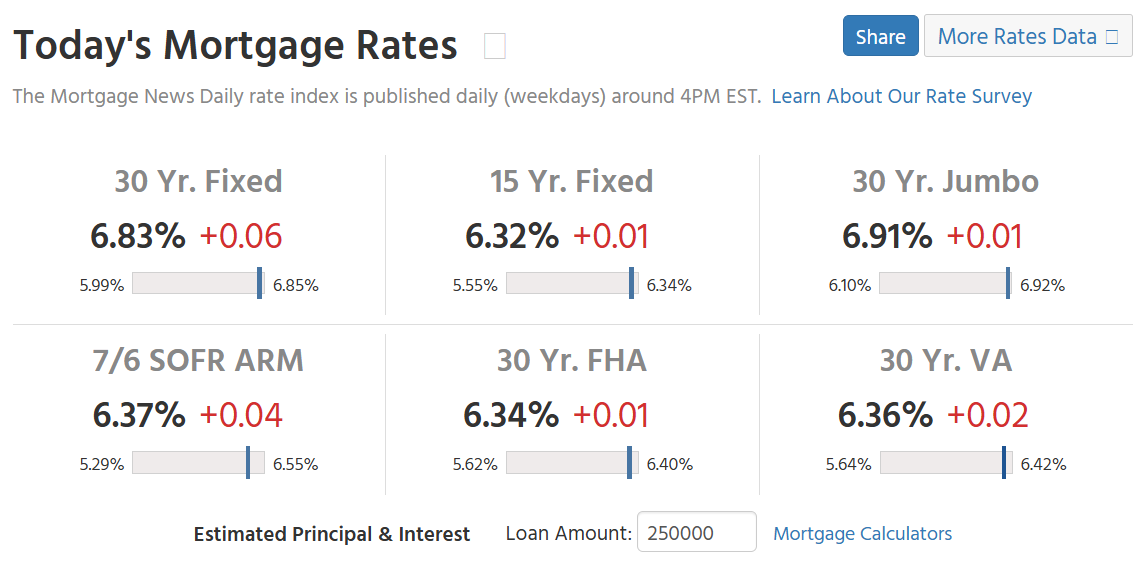
Mortgage rates first went above 6% in the fall of 2022. A lot of people assumed those levels would be short-lived.
Nope.
We’ve been above 6% ever since. Potential homebuyers have been waiting and waiting for some relief.
Now, some would tell you mortgage rates at 6% are normal based on history. And they’d be right. The average 30 year mortgage rate since the early-1970s is 7% and change.
The problem this decade is the speed of the move up in both prices and rates.
Housing prices rose 50% in a few years. Mortgage rates more than doubled in the blink of an eye. There was no time to prepare for either move.
And now many people can’t move.
Sure, there is some activity going on but housing is one of the most important segments of the economy.
High mortgage rates and high prices are restricting activity in this space.
That’s why housing remains the biggest risk when it comes to rising bond yields.
Short of a recession, it doesn’t seem like any relief is on the way either.
Further Reading:
How to Fix the Housing Market
This content, which contains security-related opinions and/or information, is provided for informational purposes only and should not be relied upon in any manner as professional advice, or an endorsement of any practices, products or services. There can be no guarantees or assurances that the views expressed here will be applicable for any particular facts or circumstances, and should not be relied upon in any manner. You should consult your own advisers as to legal, business, tax, and other related matters concerning any investment.
The commentary in this “post” (including any related blog, podcasts, videos, and social media) reflects the personal opinions, viewpoints, and analyses of the Ritholtz Wealth Management employees providing such comments, and should not be regarded the views of Ritholtz Wealth Management LLC. or its respective affiliates or as a description of advisory services provided by Ritholtz Wealth Management or performance returns of any Ritholtz Wealth Management Investments client.
References to any securities or digital assets, or performance data, are for illustrative purposes only and do not constitute an investment recommendation or offer to provide investment advisory services. Charts and graphs provided within are for informational purposes solely and should not be relied upon when making any investment decision. Past performance is not indicative of future results. The content speaks only as of the date indicated. Any projections, estimates, forecasts, targets, prospects, and/or opinions expressed in these materials are subject to change without notice and may differ or be contrary to opinions expressed by others.
The Compound Media, Inc., an affiliate of Ritholtz Wealth Management, receives payment from various entities for advertisements in affiliated podcasts, blogs and emails. Inclusion of such advertisements does not constitute or imply endorsement, sponsorship or recommendation thereof, or any affiliation therewith, by the Content Creator or by Ritholtz Wealth Management or any of its employees. Investments in securities involve the risk of loss. For additional advertisement disclaimers see here: https://www.ritholtzwealth.com/advertising-disclaimers
Please see disclosures here.
